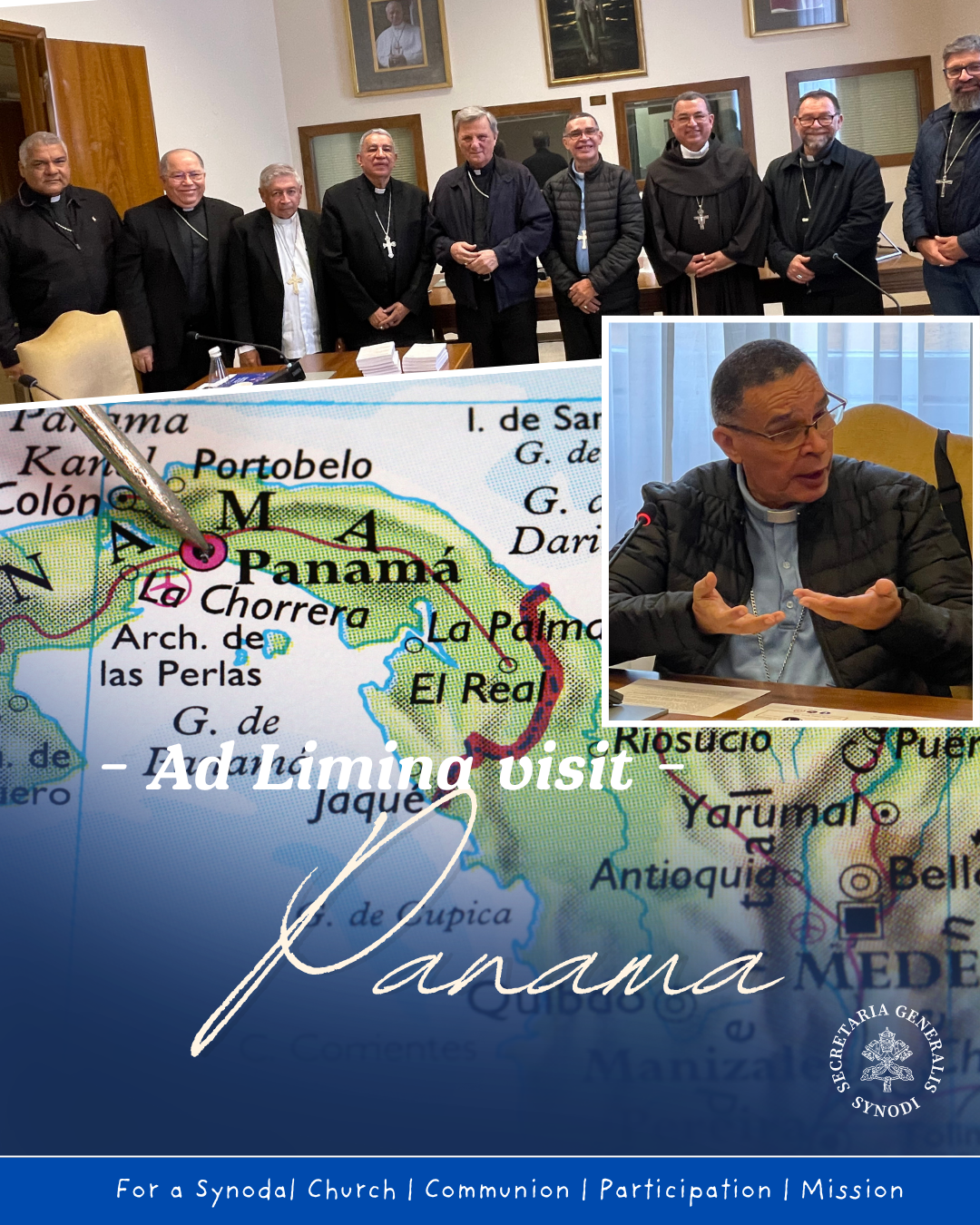
In the morning of Wednesday 21 October 2026, Cardinal Mario Grech met with the bishops of the Episcopal Conference of Panama during their ad limina visit. Bishop Edgardo Cedeño Muñoz of Penonomé, vice president of the Episcopal Conference, presented the initiatives undertaken to implement synodality in local communities.
For the implementation phase of synodality, a “National Commission for Synodality” has been established, composed of various representatives of the Church and including a bishop representing the Episcopal Conference. This commission is supported in each diocese by an implementation delegate or a dedicated synodal team.
The bishops have placed particular emphasis on disseminating the contents of the Synod’s Final Document by creating a full-fledged university-level program leading to a diploma (in collaboration with Santa Maria La Antigua University)—an initiative modeled after that of the neighboring Episcopal Conference of Nicaragua—as well as by producing a specialized manual for pastoral workers and utilizing the local Church’s media outlets (radio, television). Significant effort has also been devoted to training in synodality for participatory bodies at the parish, diocesan, and provincial levels.
In general, the bishops note a growing interest among lay collaborators in “walking together”—an aspect that was by no means a given, given the initial indifference or a certain degree of resistance from a significant portion of the clergy, who believed that synodality was nothing more than a passing fad or a way to strip them of their authority. This initial resistance was not limited to the clergy alone. Even among the faithful, there was a tendency toward conservatism and resistance to active participation. The Panamanian bishops see this situation as stemming in part from misinformation about synodality spread through social media, which calls into question the validity of the teachings and applications of the Second Vatican Council.
The fruits of this work can be seen not only in a greater willingness to walk together but also in several initiatives aimed at making the synodal style a regular practice. Among these is the possibility of recognizing the collaboration of the laity as ministries in areas such as human mobility, the family, and spiritual accompaniment.
The discussion with the Secretary General of the Synod highlighted the urgent need for formation in synodality for the clergy—and especially for candidates for the priesthood—the creation of guidelines and materials that present synodality in language more accessible to diverse cultures, and the promotion of the integration of the various spiritualities of groups and movements.