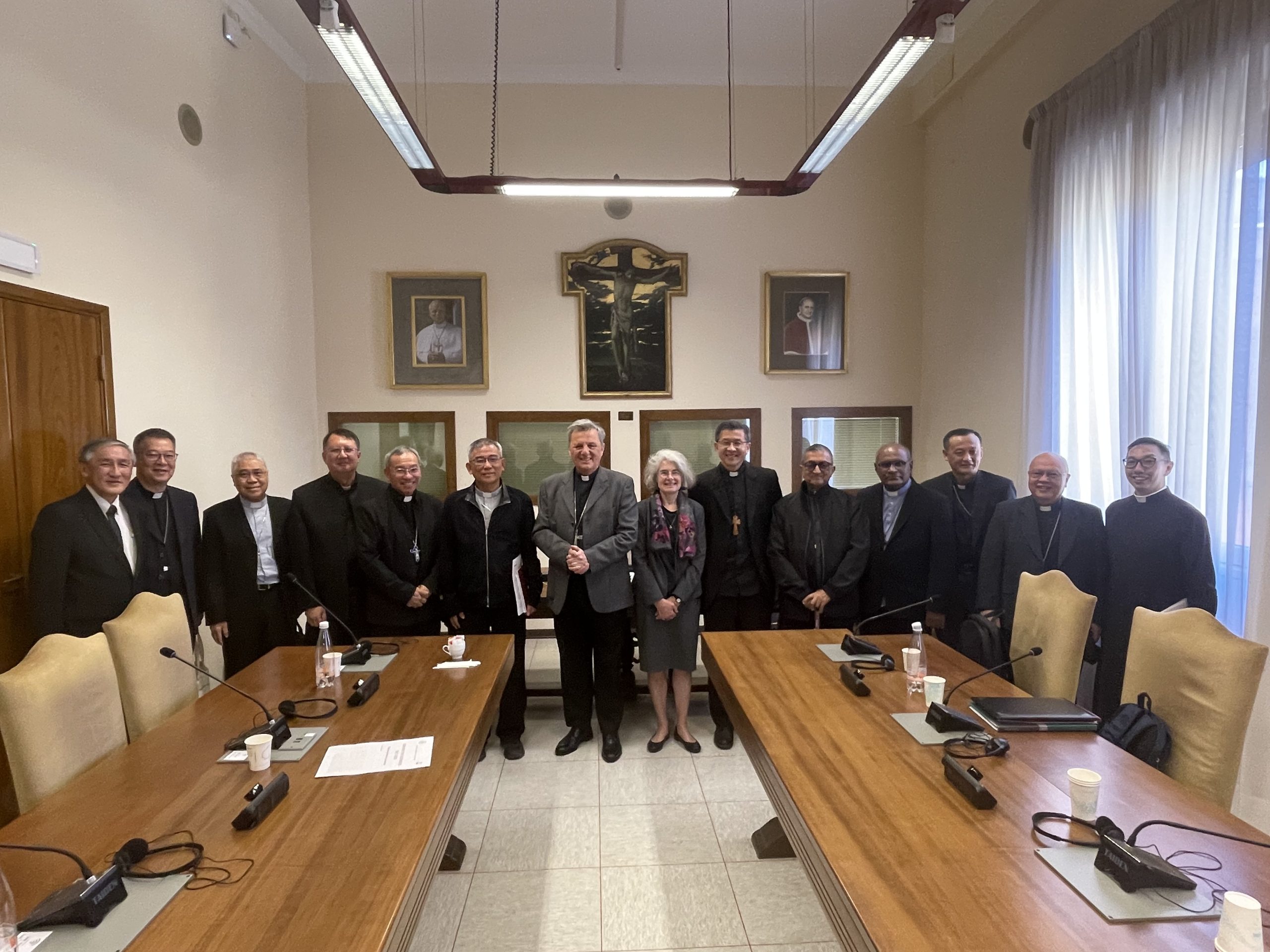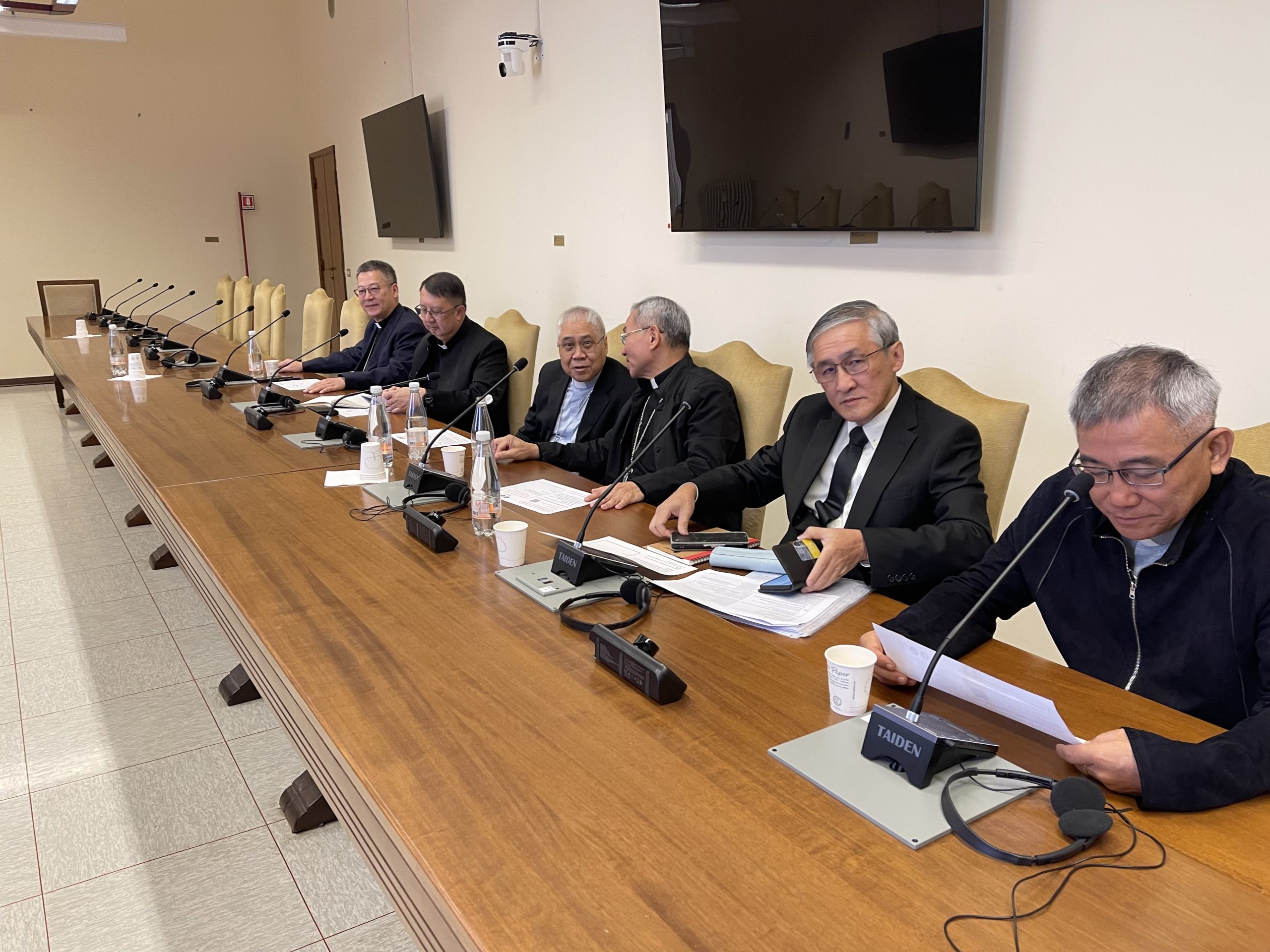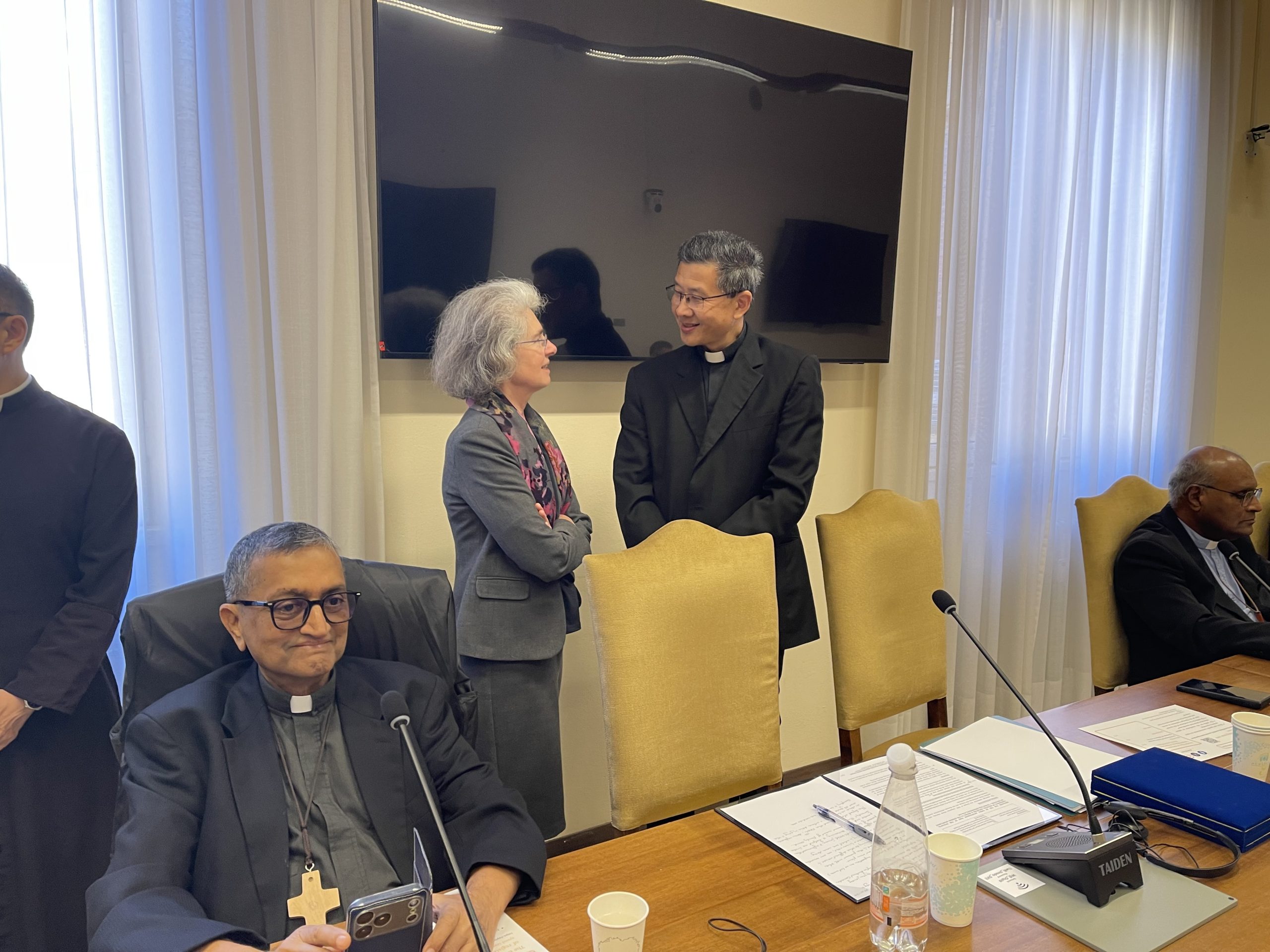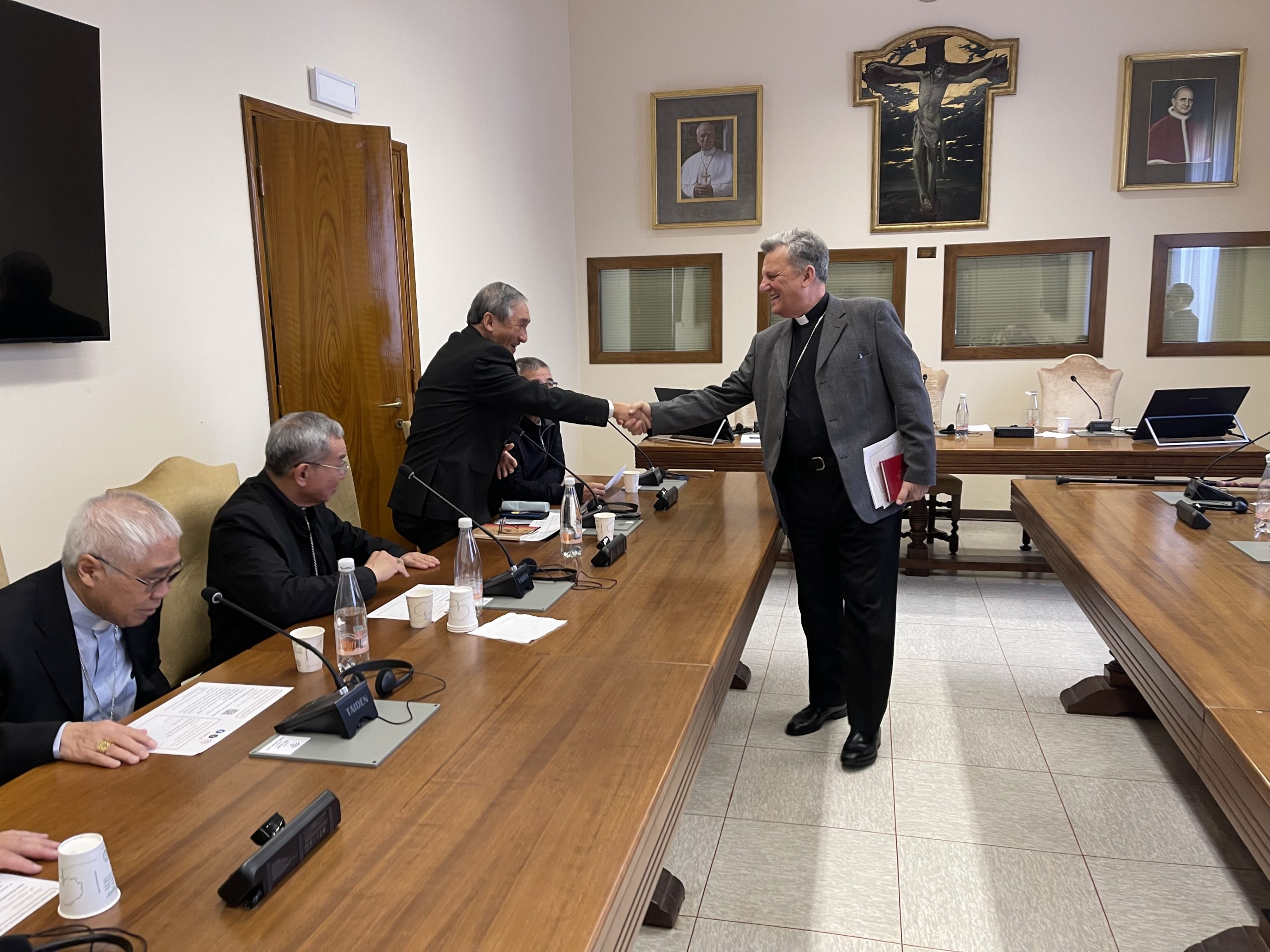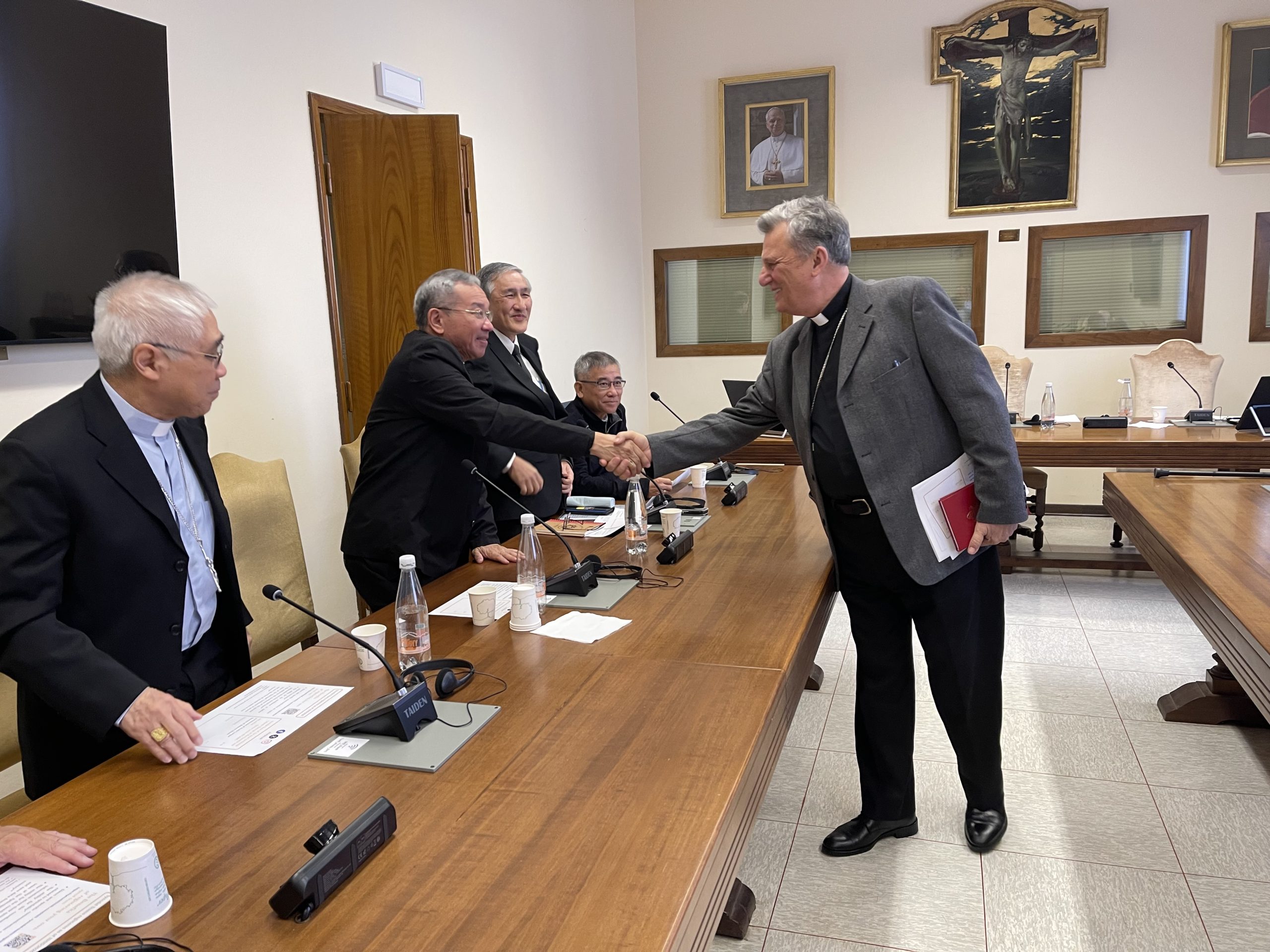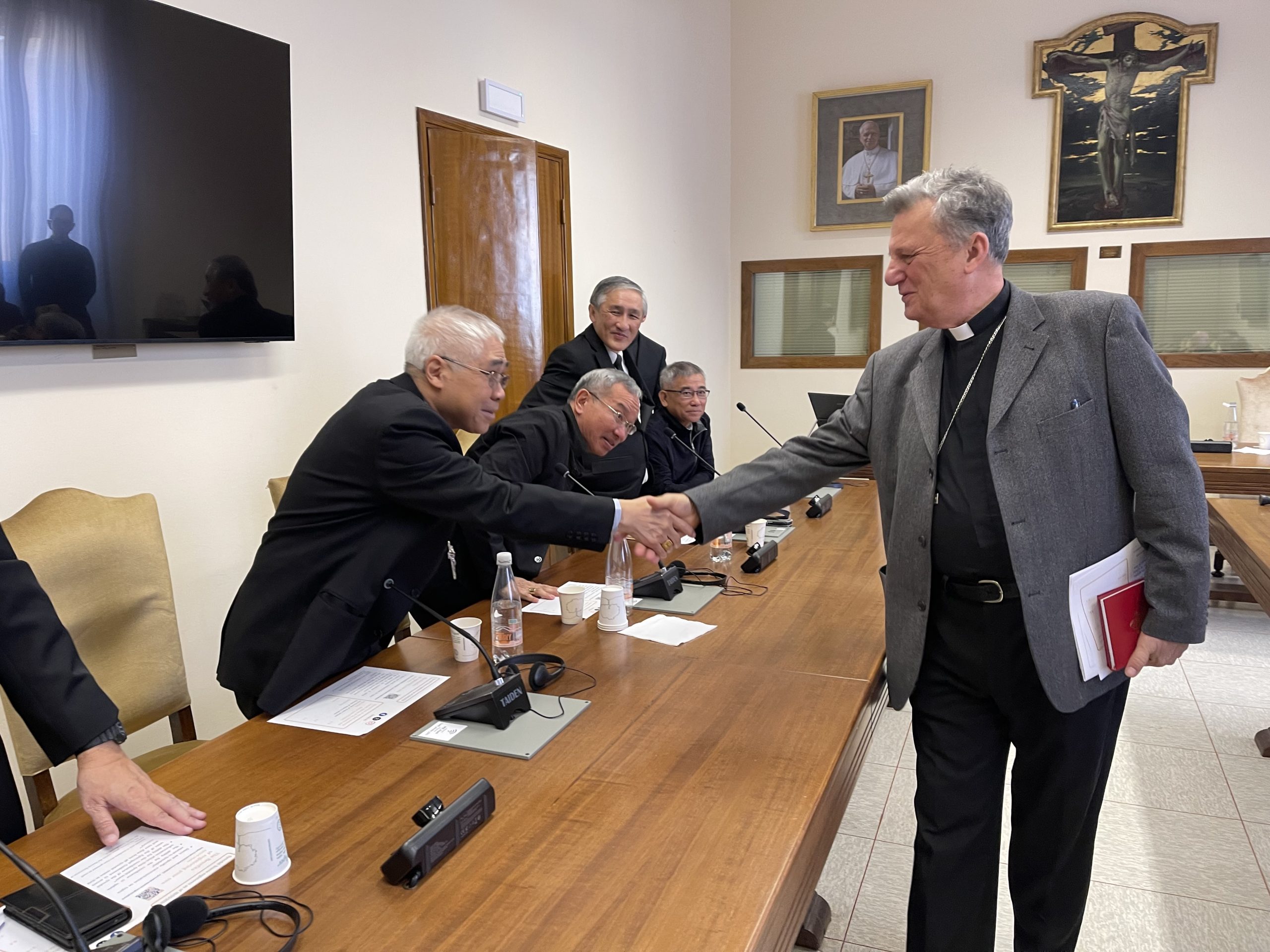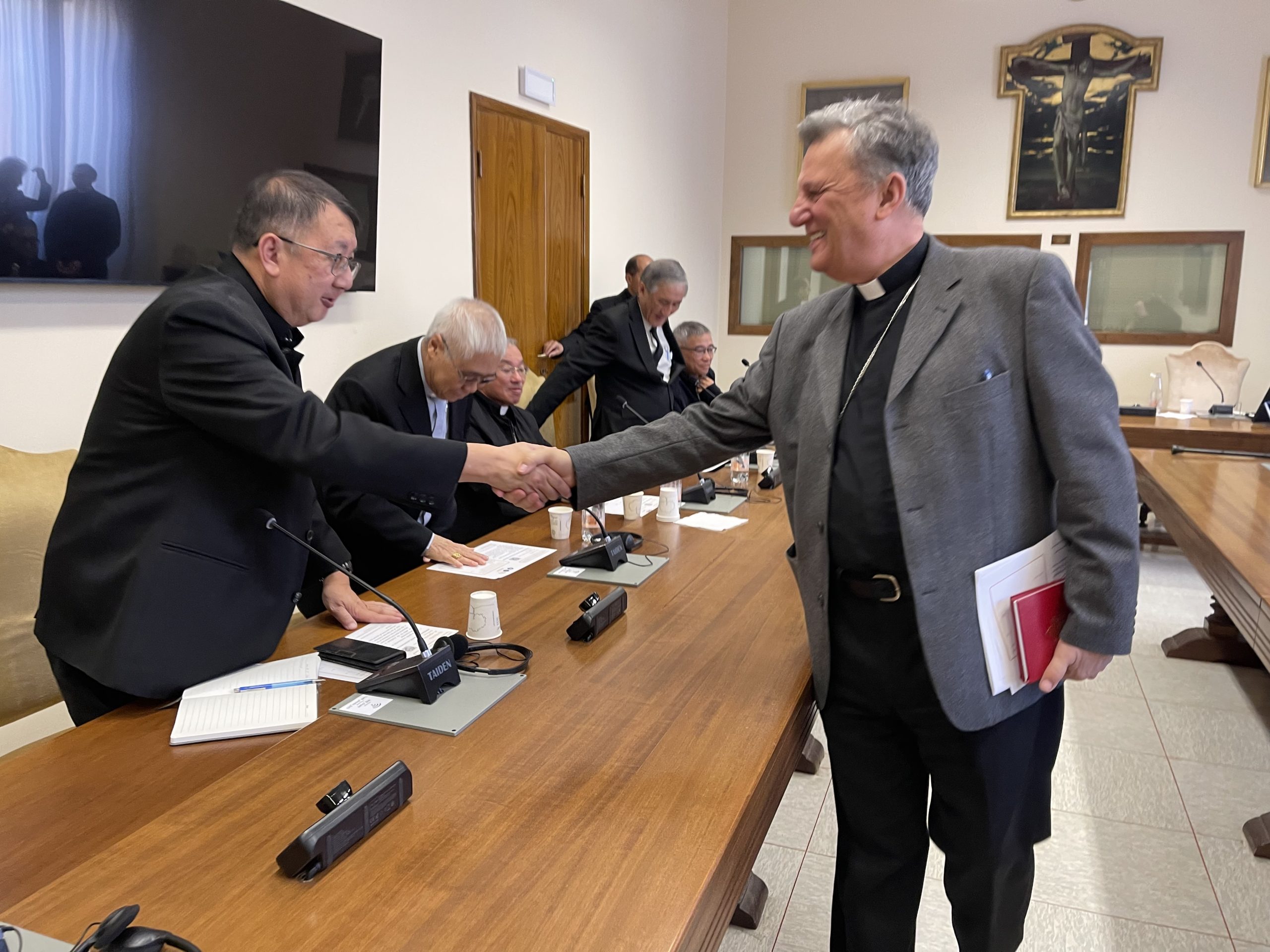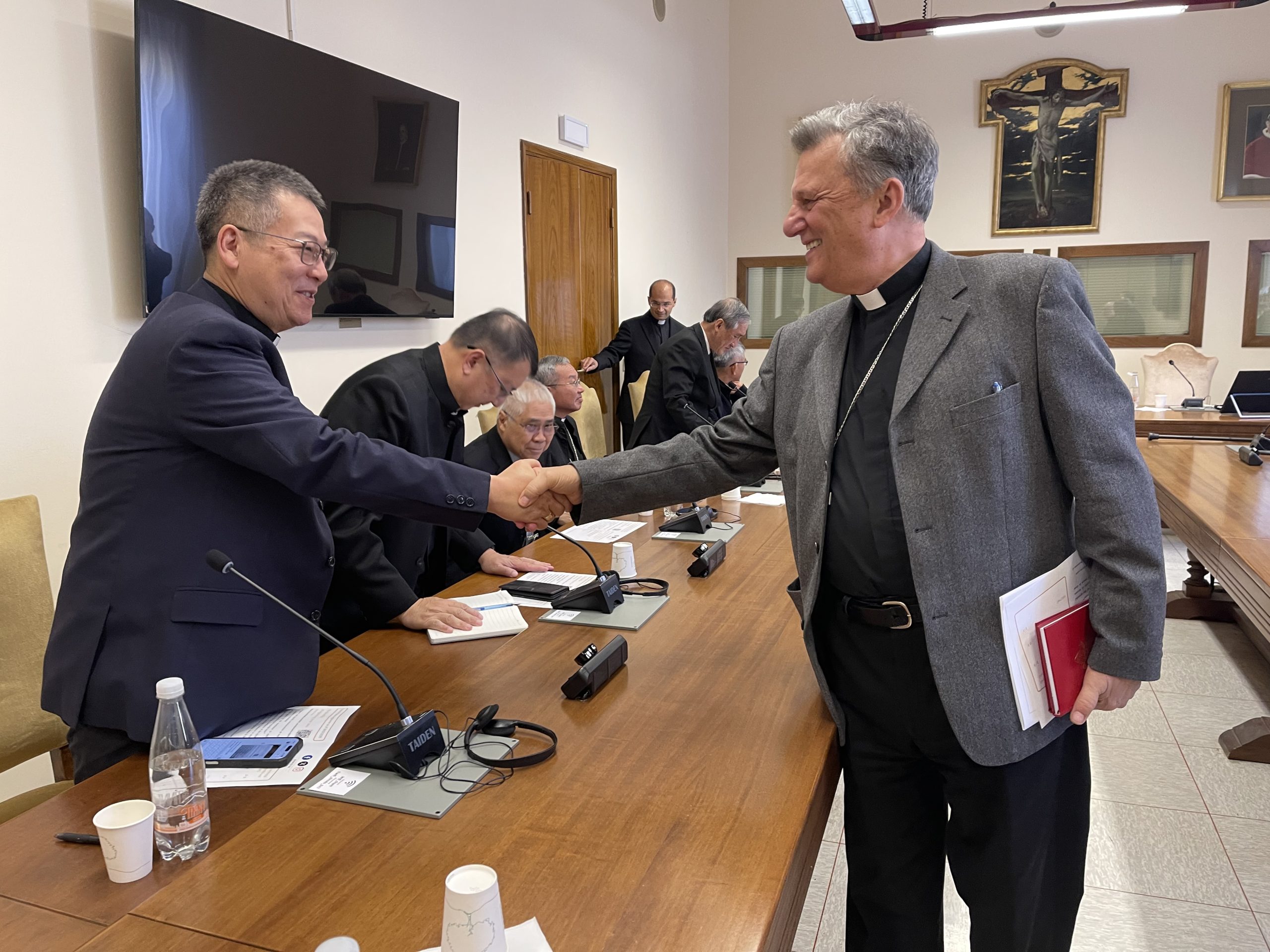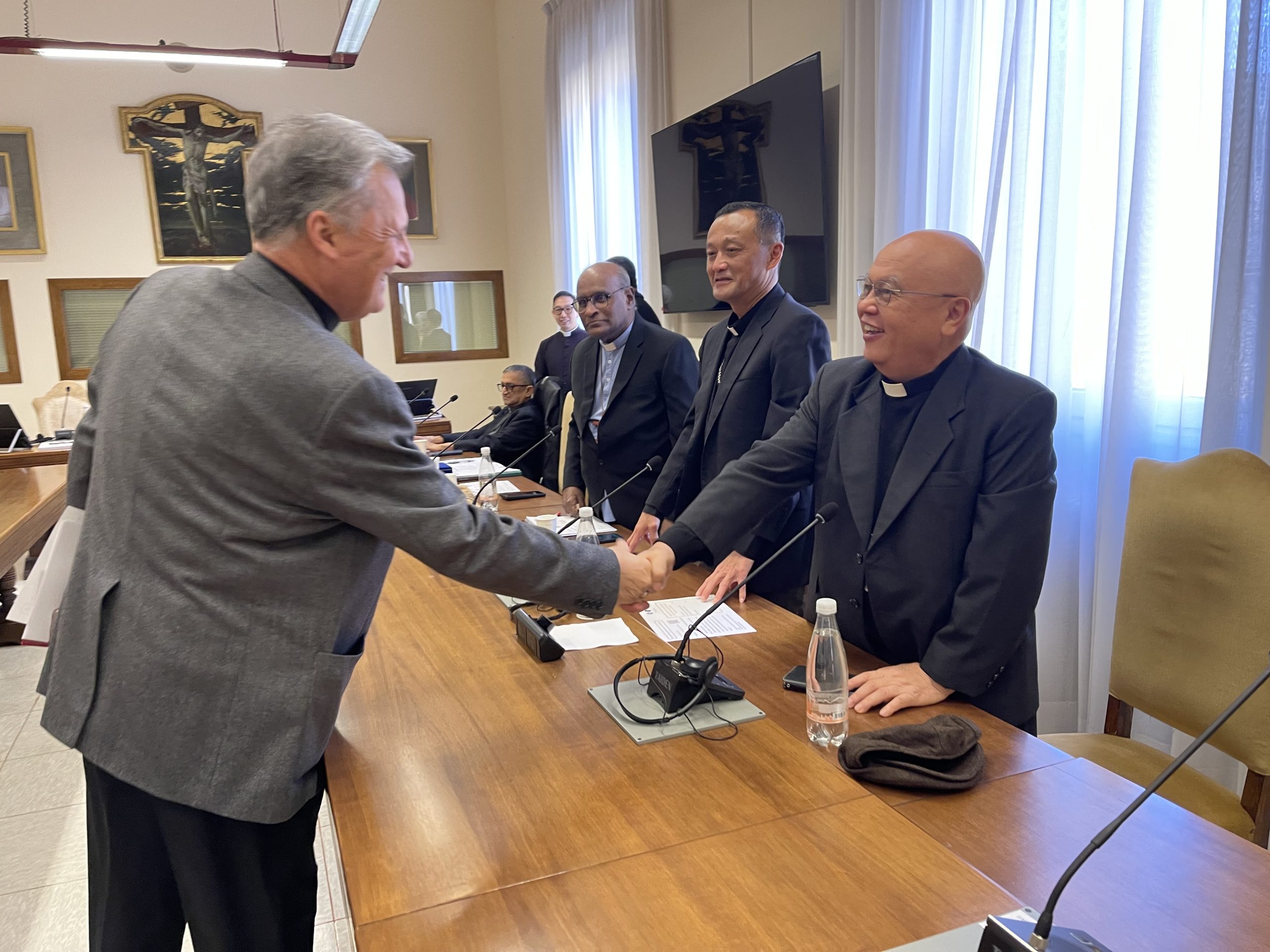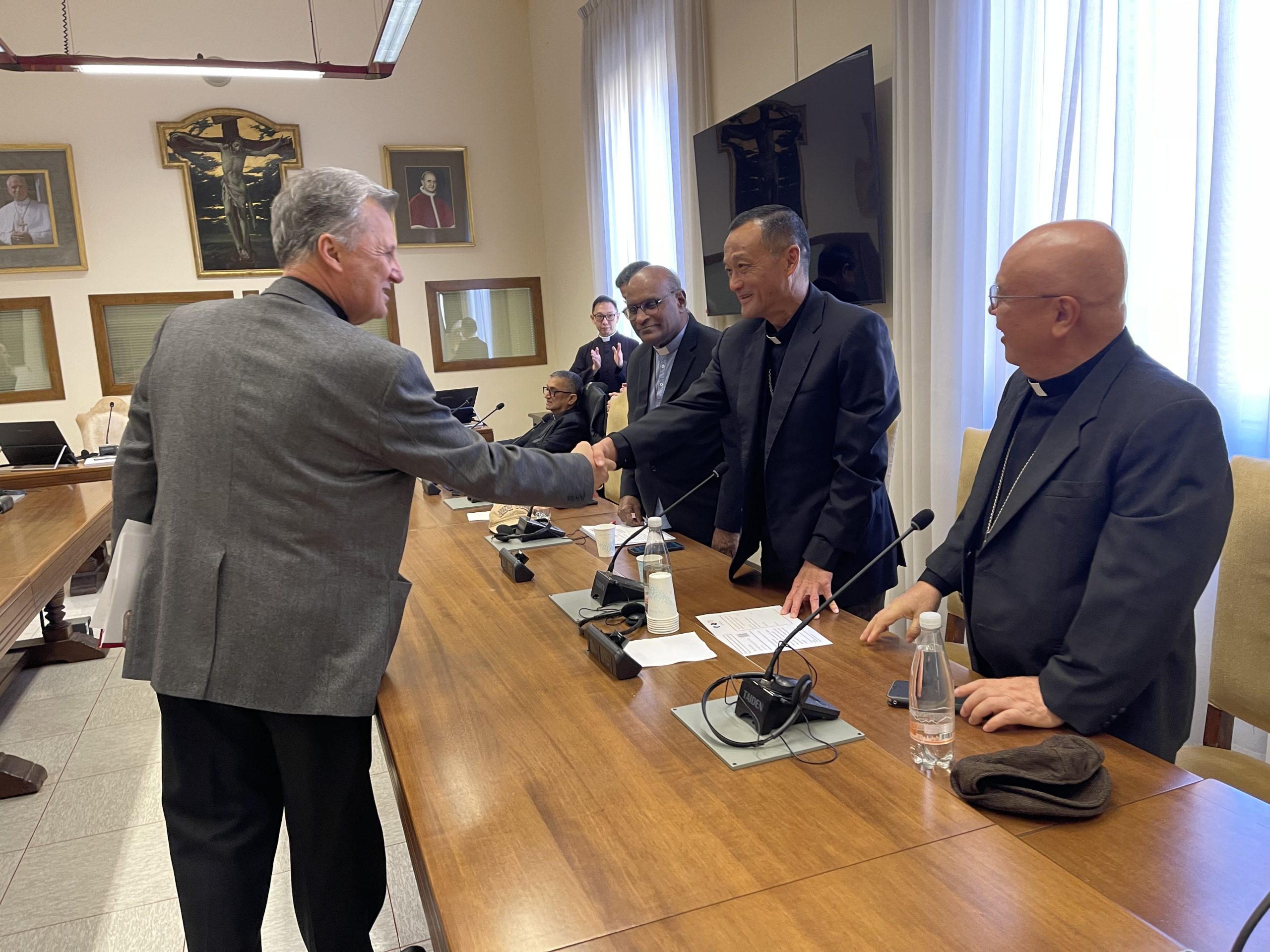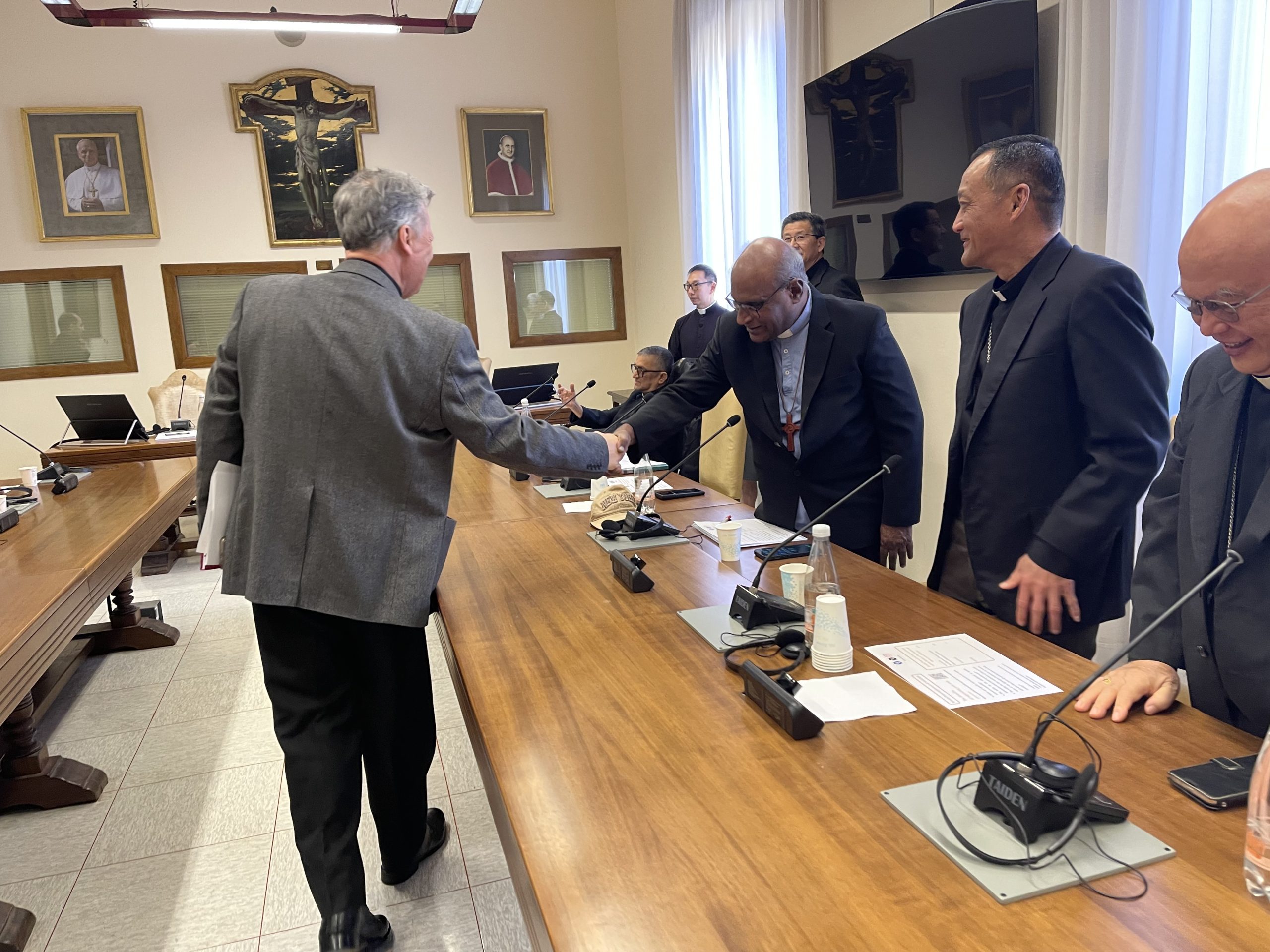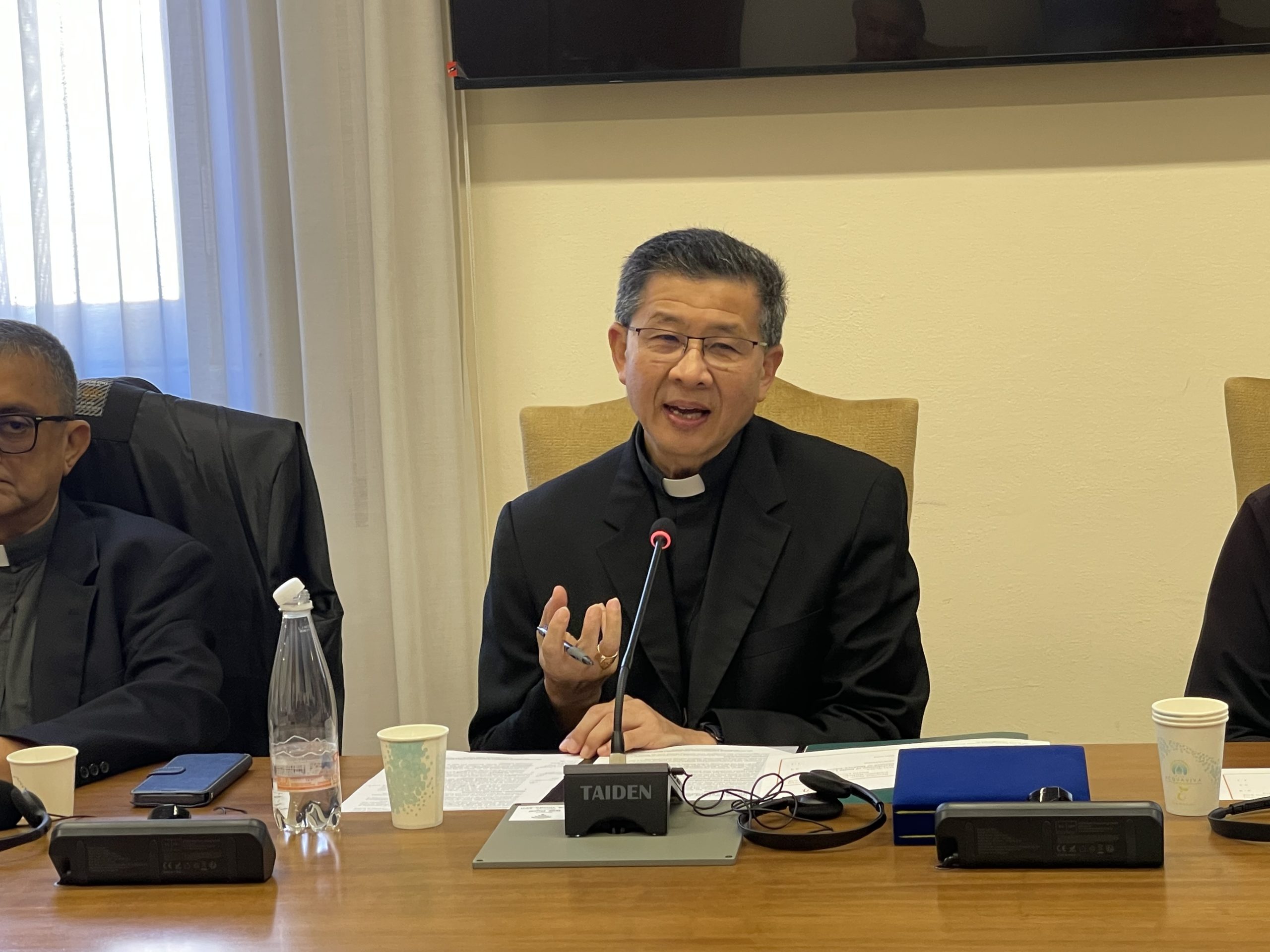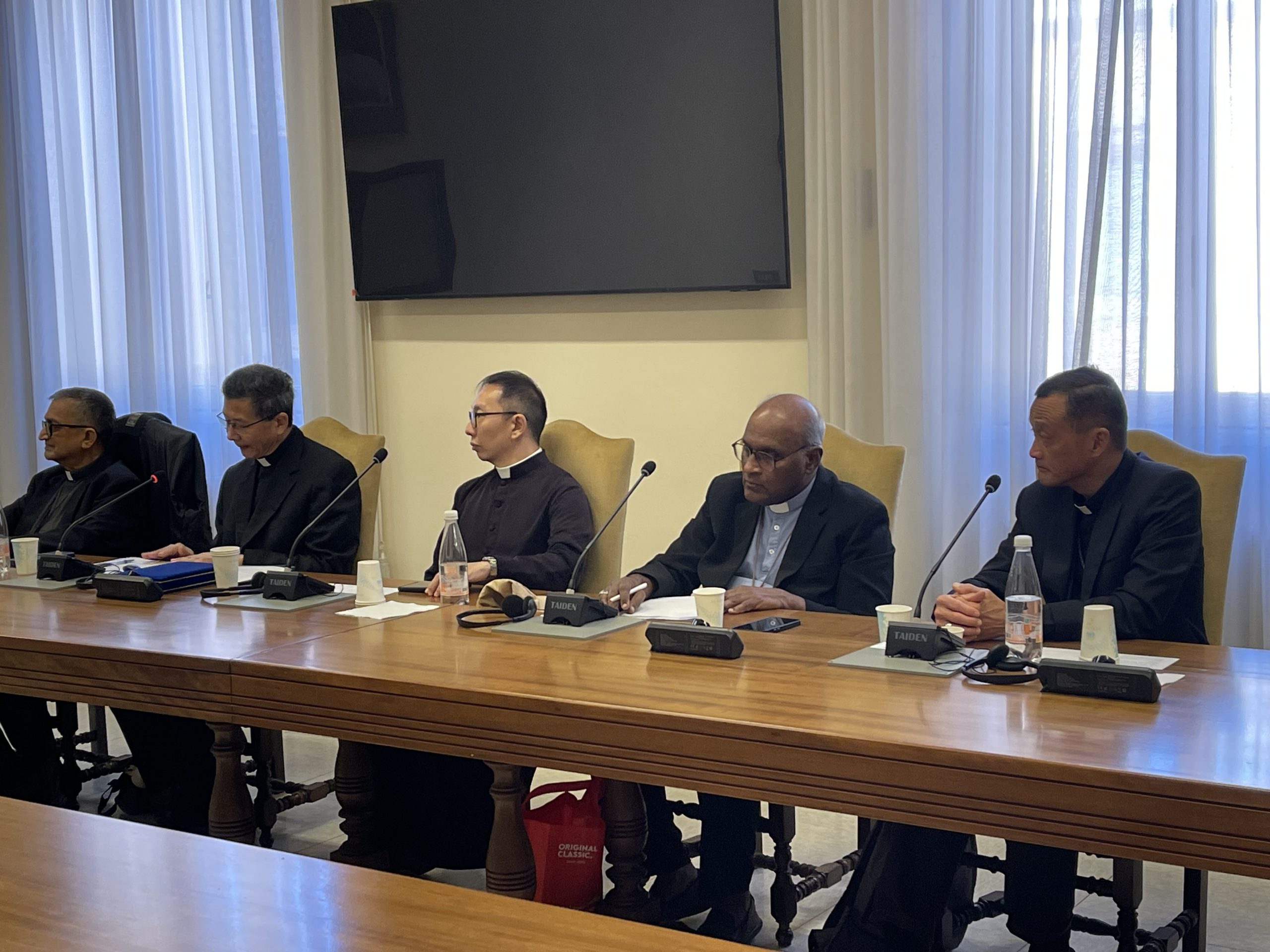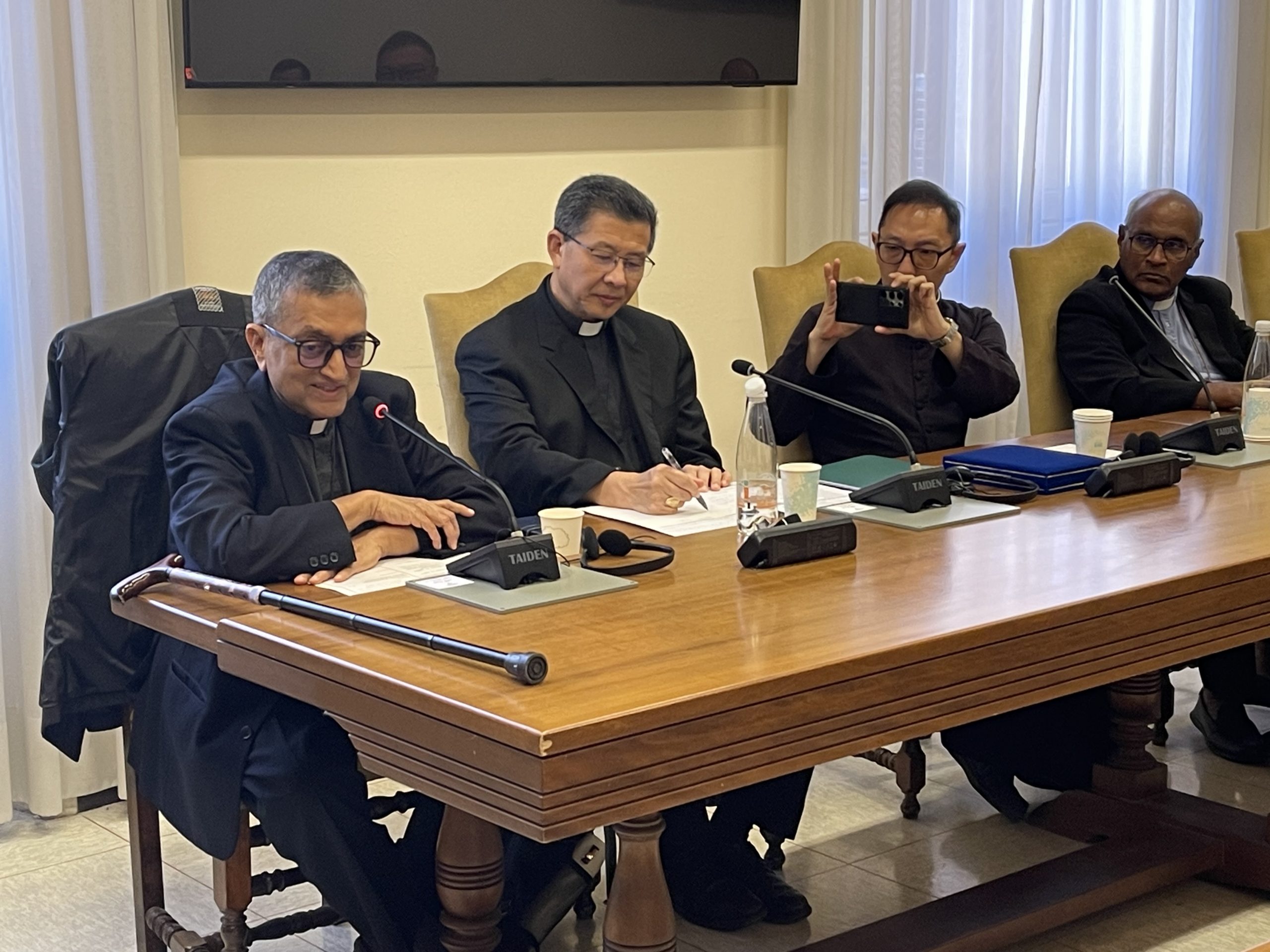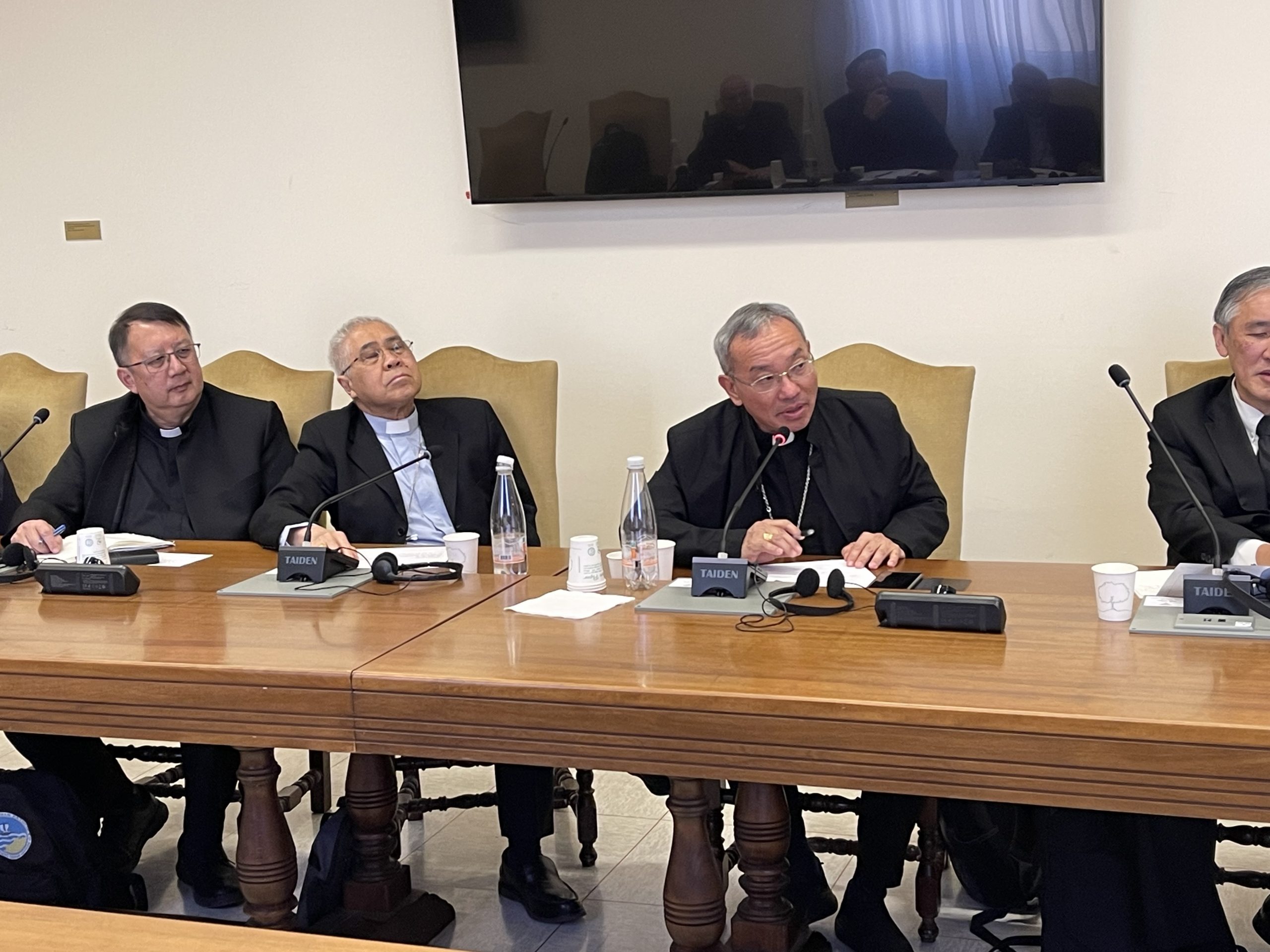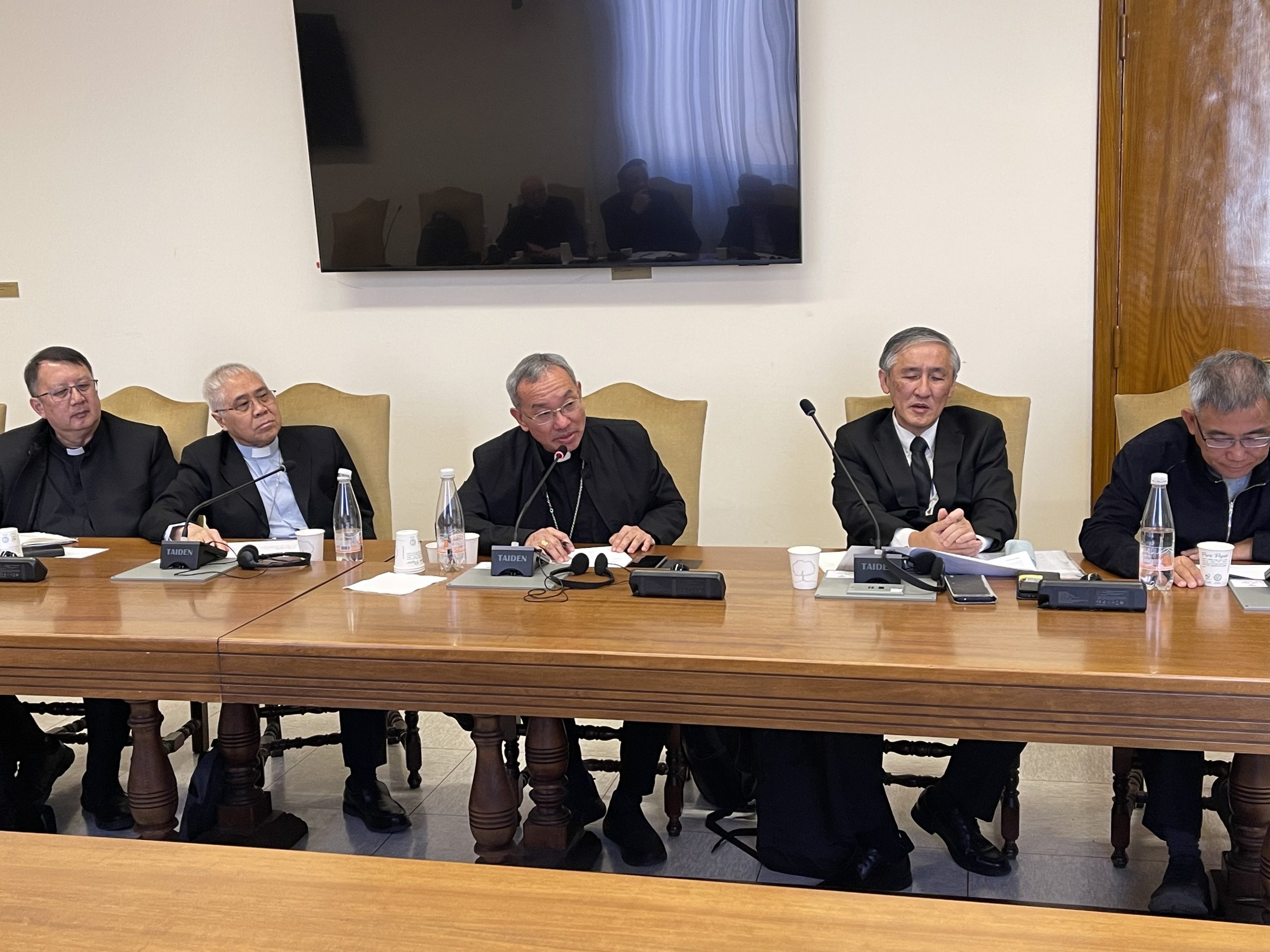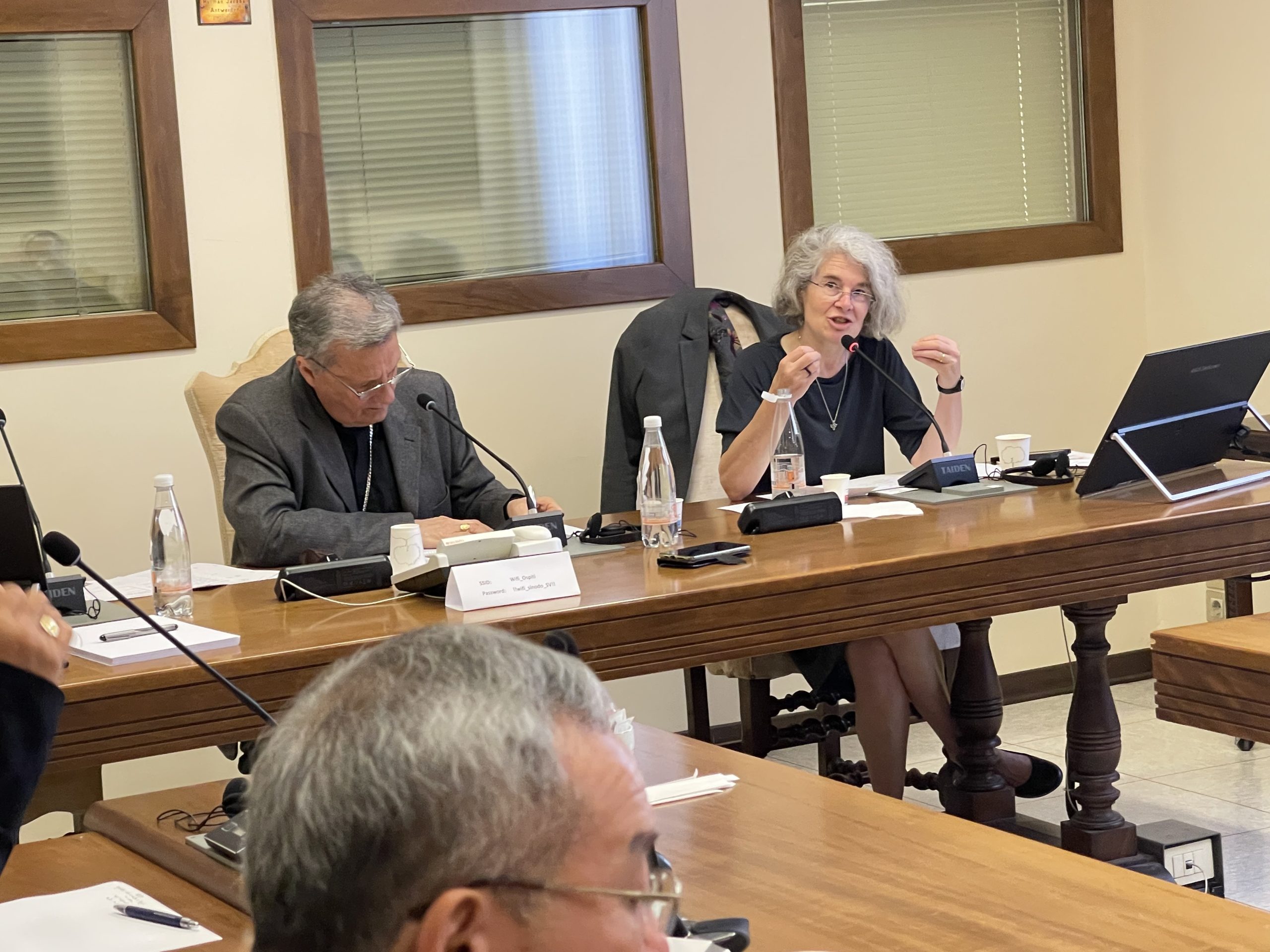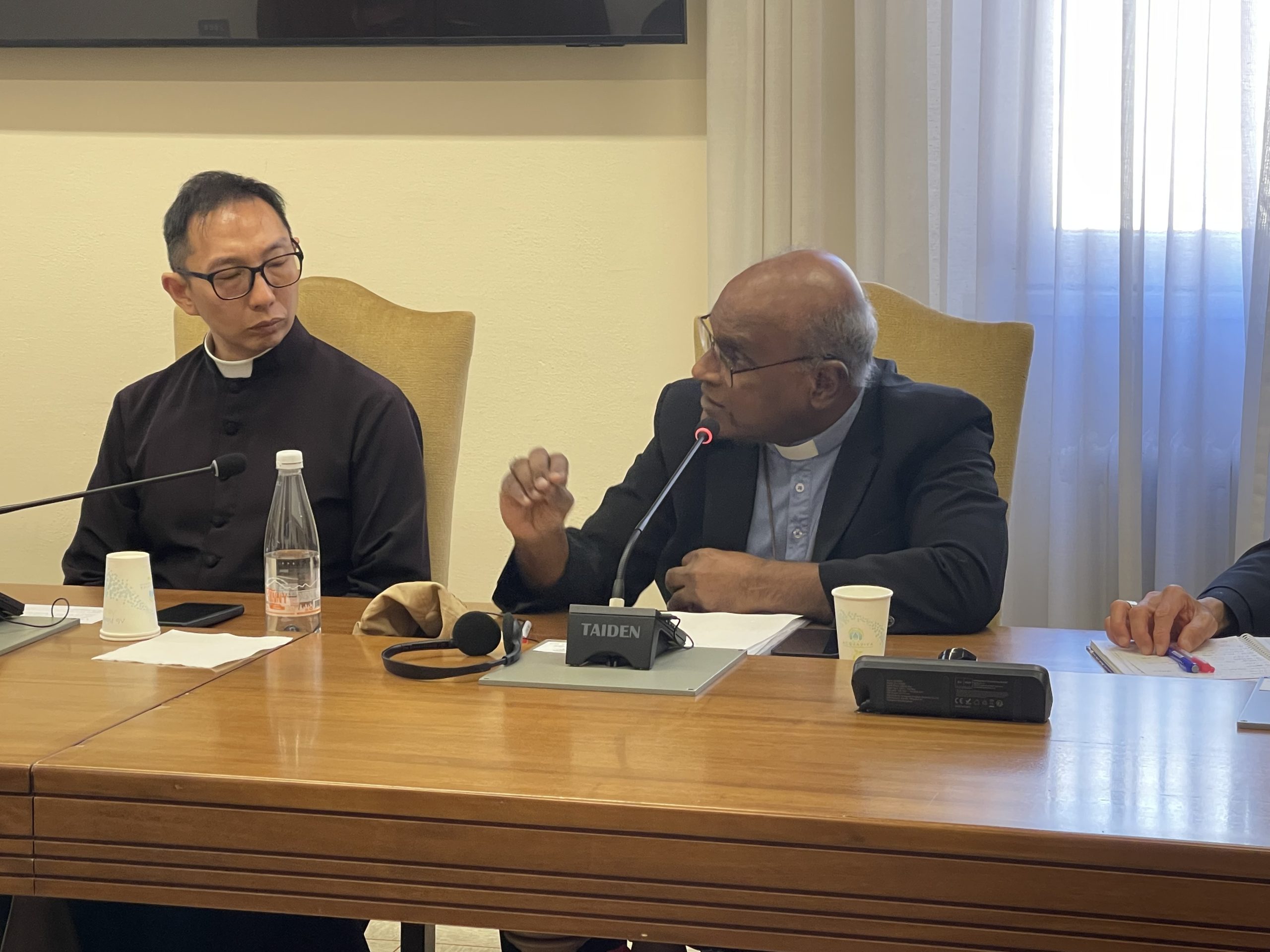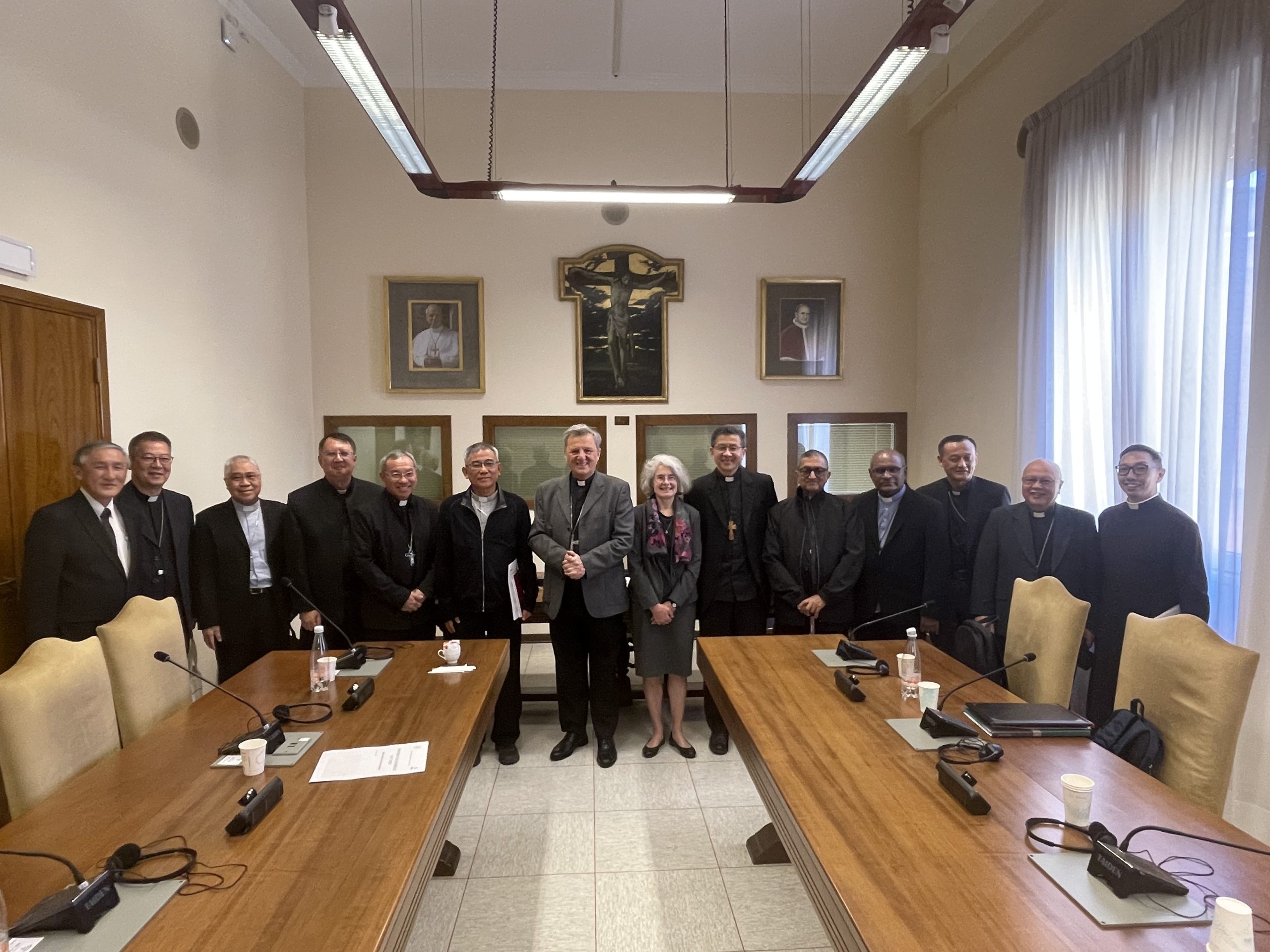
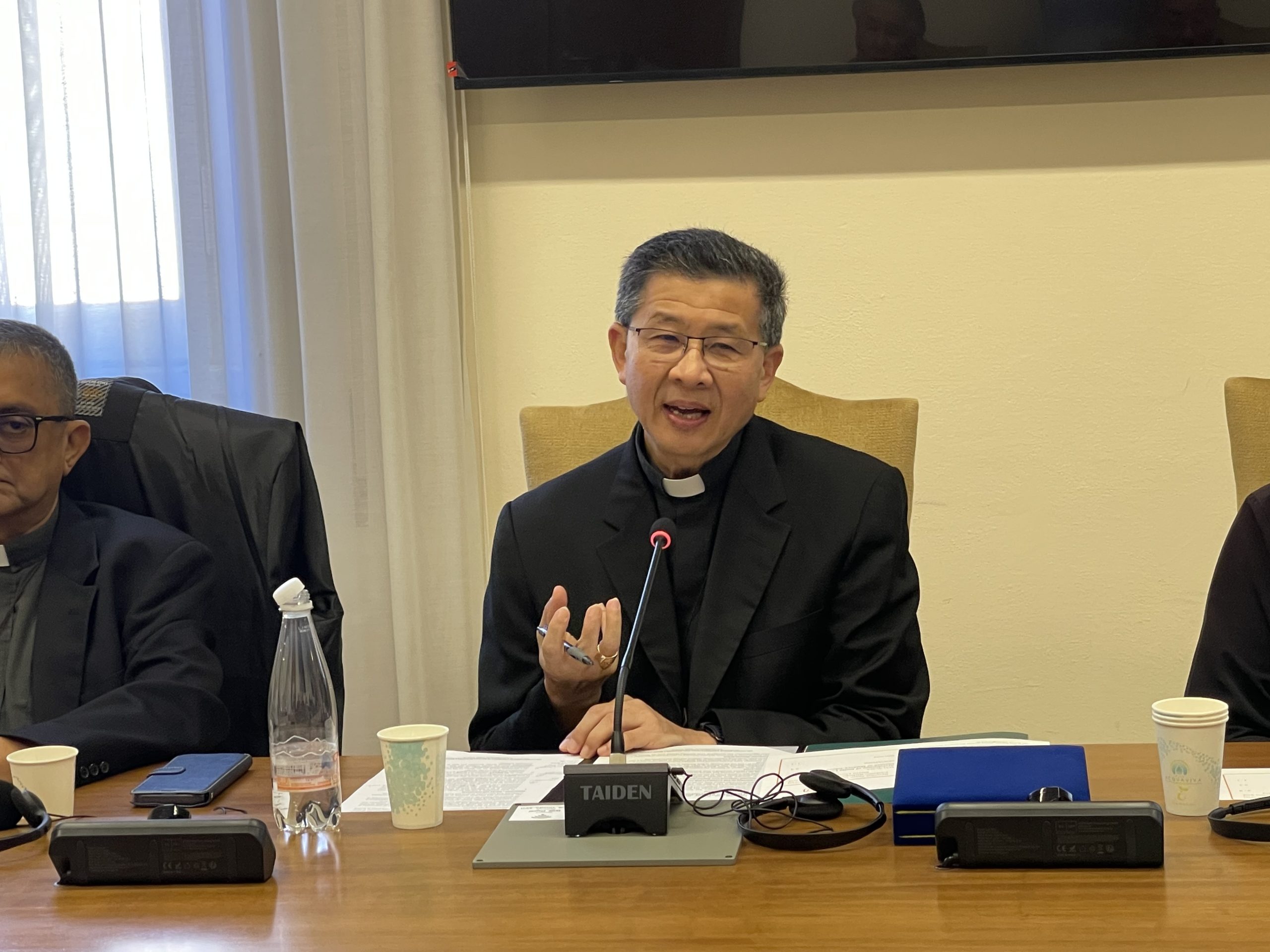
This morning Cardinal Mario Grech and sr. Nathalie Becquart XMCJ met with the Bishops of the Episcopal Conference of Malaysia, Singapore and Brunei on the occasion of their ad limina visit.
The Episcopal Conference that covers three countries (Malaysia, Singapore and Brunei) is quite recent as it was constituted in 1967 in the aftermath of the II Vatican Council. Catholics are estimated at 1.63 million (or, 3.9%) of the global population of 41.5 million. Majority of the population in Malaysia and Brunei are of the Islamic faith, except Singapore, where Buddhism is the dominant religion.
Mons. Julian LEOW, Archbishop of Kuala Lumpur and President of the CBCMSB reported about the implementation of synodality in the region. Despite some initial hesitation in accepting the invitation to begin the synodal process, the local churches in those three countries soon embraced it with great enthusiasm. “Listening and communal discernment have enabled us to focus more closely on certain topics (Ecology, Family, Society and Church) we have been working on since 2021 in preparation for the Malaysian Pastoral Convention scheduled for next September,” said the bishops.
In fact, synodality is nothing new in that part of the world. Since 1976, Pastoral Ecclesial Assemblies were held every ten years (1986, 1996, 2006, 2016). In September 2026, the first national level Malaysia Pastoral Convention (MPC) will be gathering 800 participants comprising bishops, clergy, religious and laity will be gathering.
In general, participation in these pastoral assemblies begin at parish level, leading to district, vicariate or deanery level, to diocese, regional and finally to national level. The participation of the laity together with the clergy in developing and implementation of the parish pastoral plan is one positive outcome. In many parish ministries, the laity collaborates closely with their respective parish priest in leading and pastoring that ministry.
Clear structures have helped improve communication and dissemination of information to the laity and to the clergy and religious. Also, formation and implementation of active listening, decision-making and discernment processes are in progress in ministries and participatory bodies. Accountability and evaluation are imbedded in the structures.
Nowadays, an episcopal level national synodal team is setup, headed by the President of the Bishops’ Conference and all the eleven dioceses have a diocesan coordinator with their respective team to oversee the implementation phase of the synodal pathways.
Among the difficulties, the bishops noted clericalism which is still predominant in their realities. “The lay faithful tend to leave to the clergy for decision taking”, they stated. Also, the difficulty to form leaders in the synodal church who are mature disciples capable of guiding communities in listening, participating and discerning, to empower them towards transformation and paradigm shift from a maintenance church to a missionary church. Finally, then notice their fear in ensuring the retention of institutional knowledge –the learning and the accumulation of lived experiences from our clergy, religious and laity – to pass to the future generations, beyond liturgy, devotions and faith to include life-giving and community building.
During the discussion, other topics were discussed such as the importance of the Ecumenical and Interfaith ministry in this region; the participation of young people and the transmission of faith and the formation of priests and seminarian.