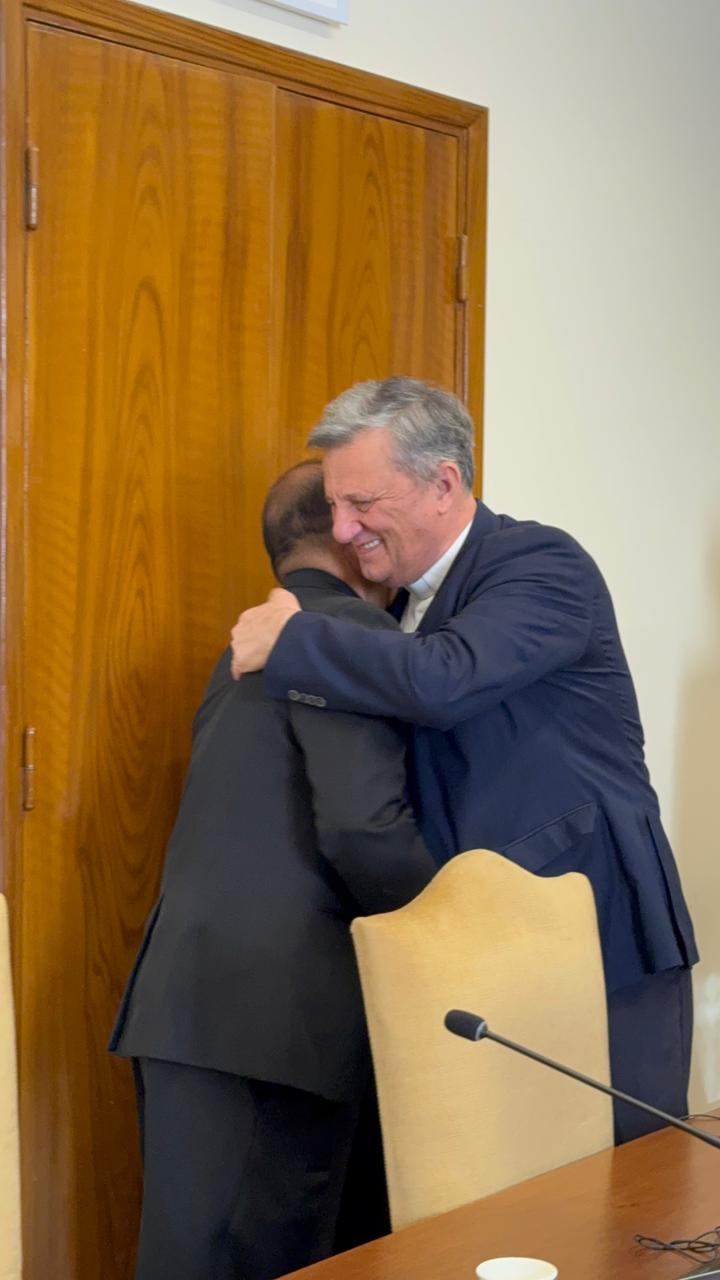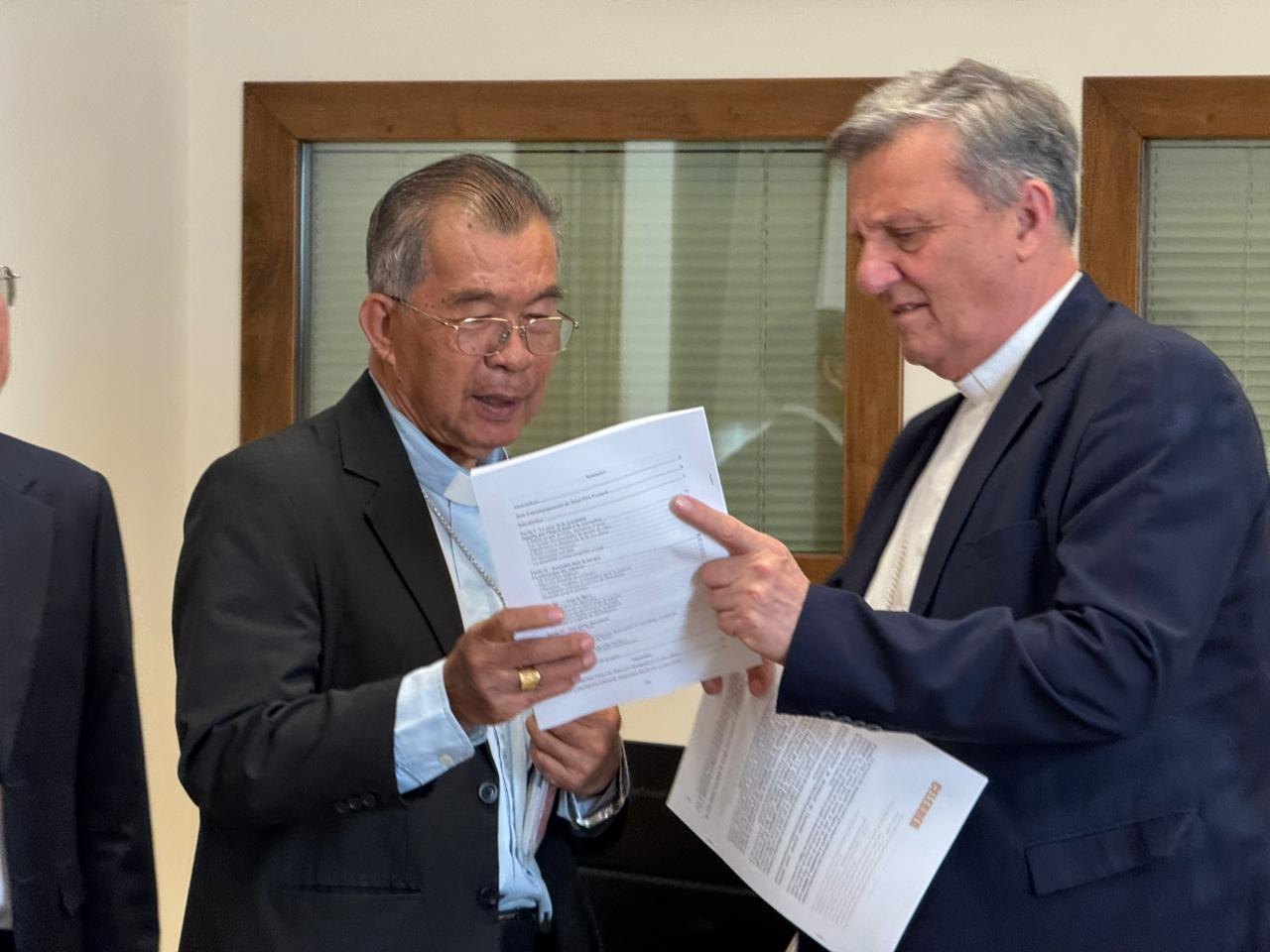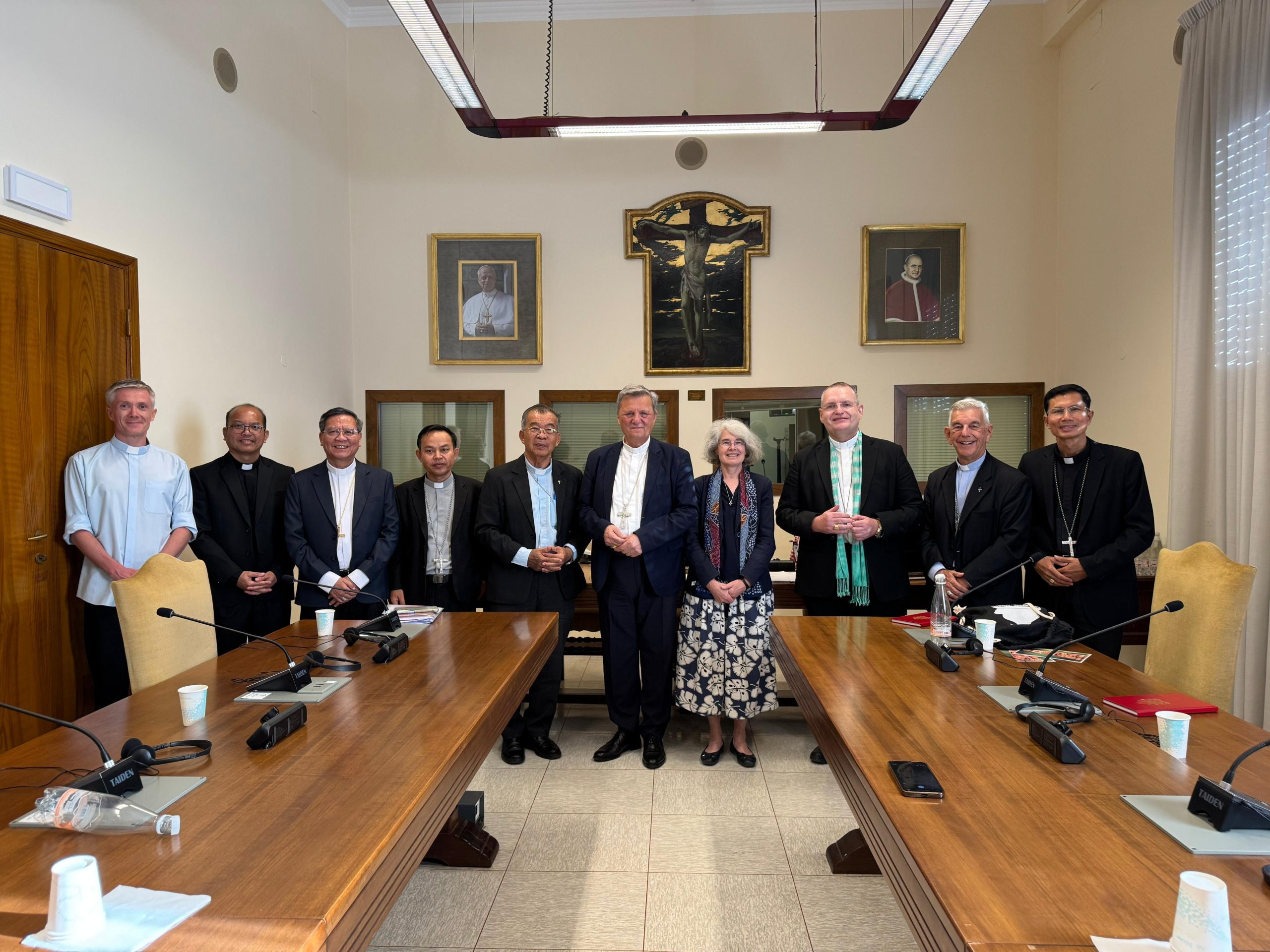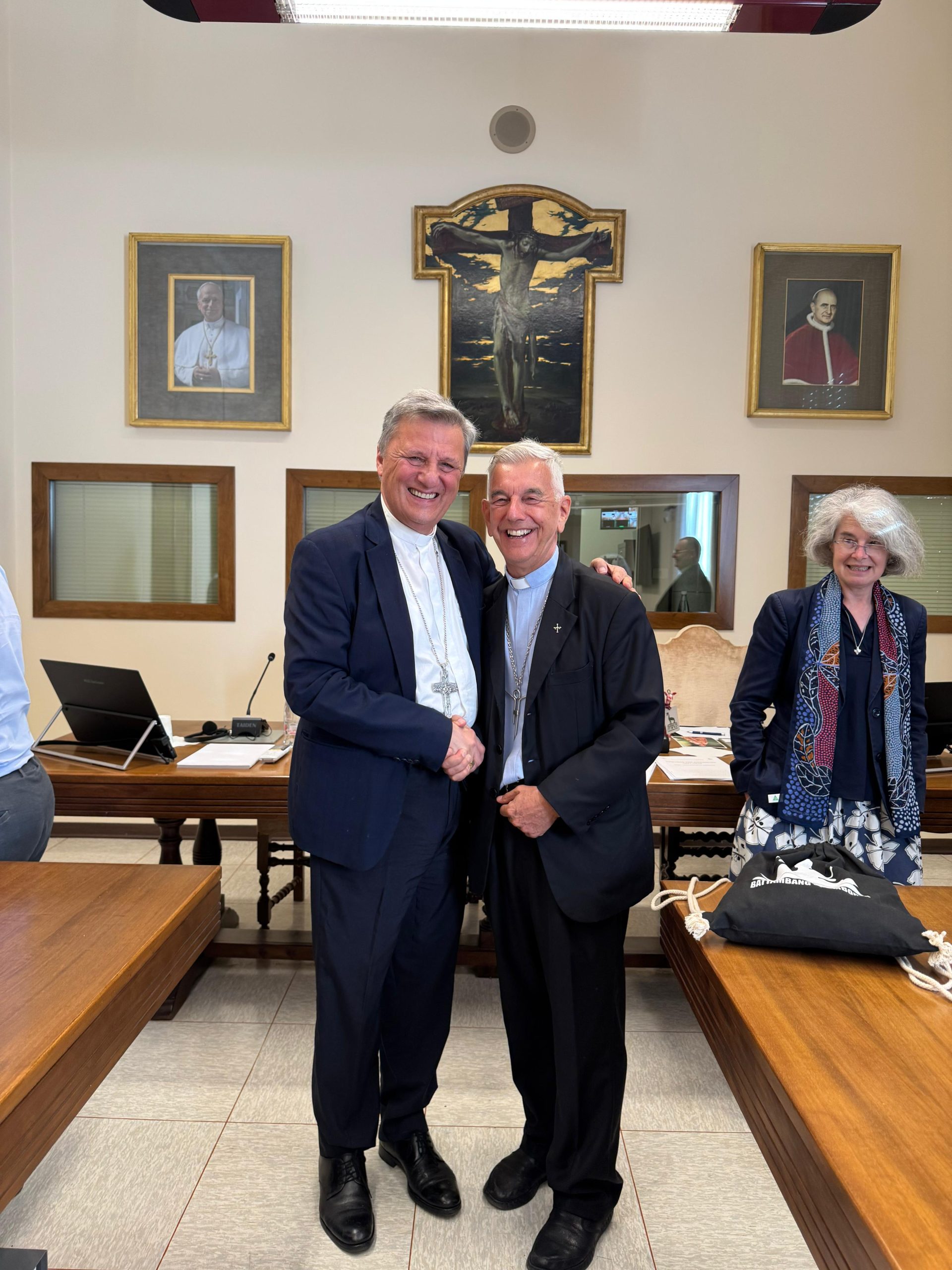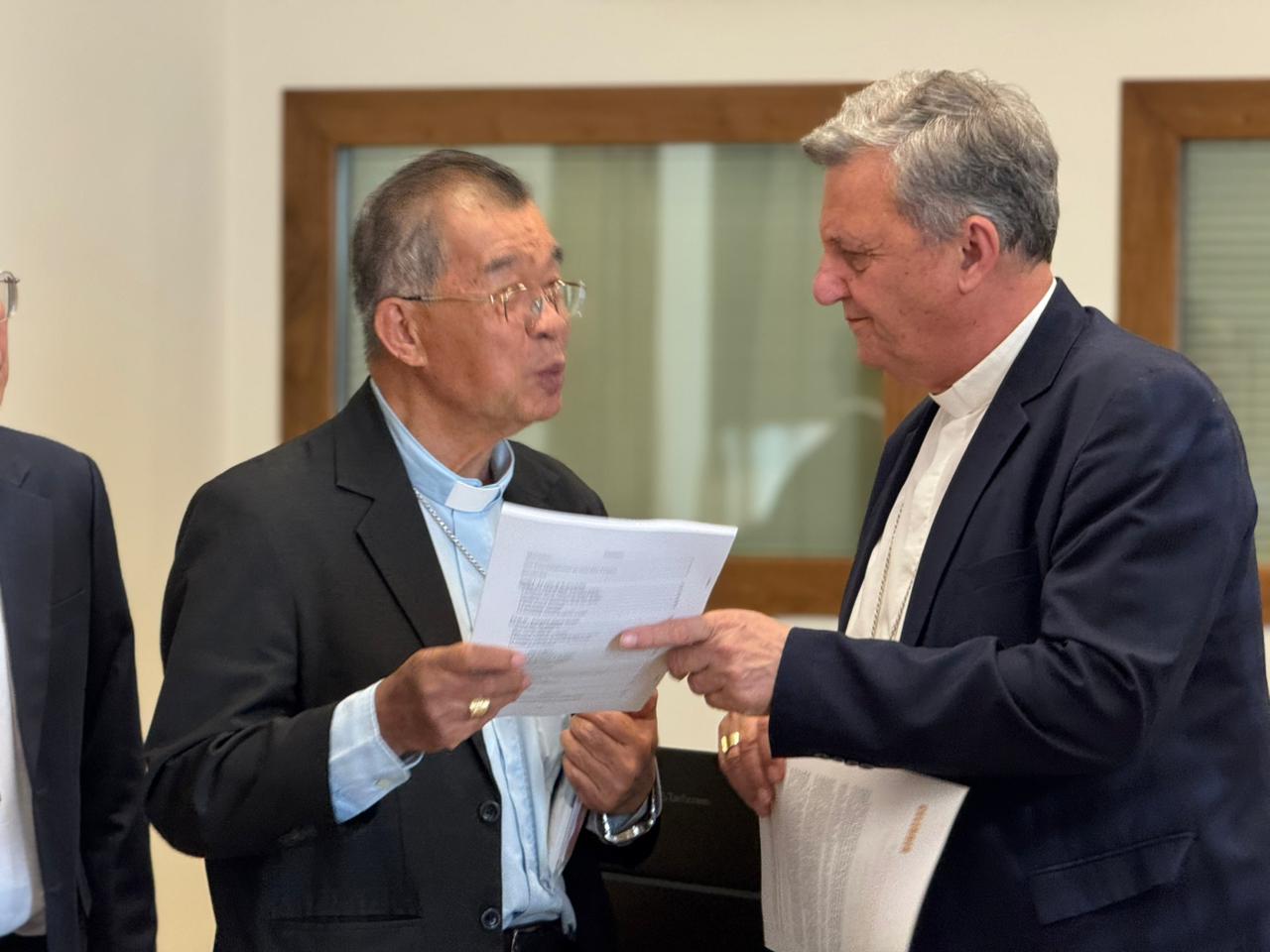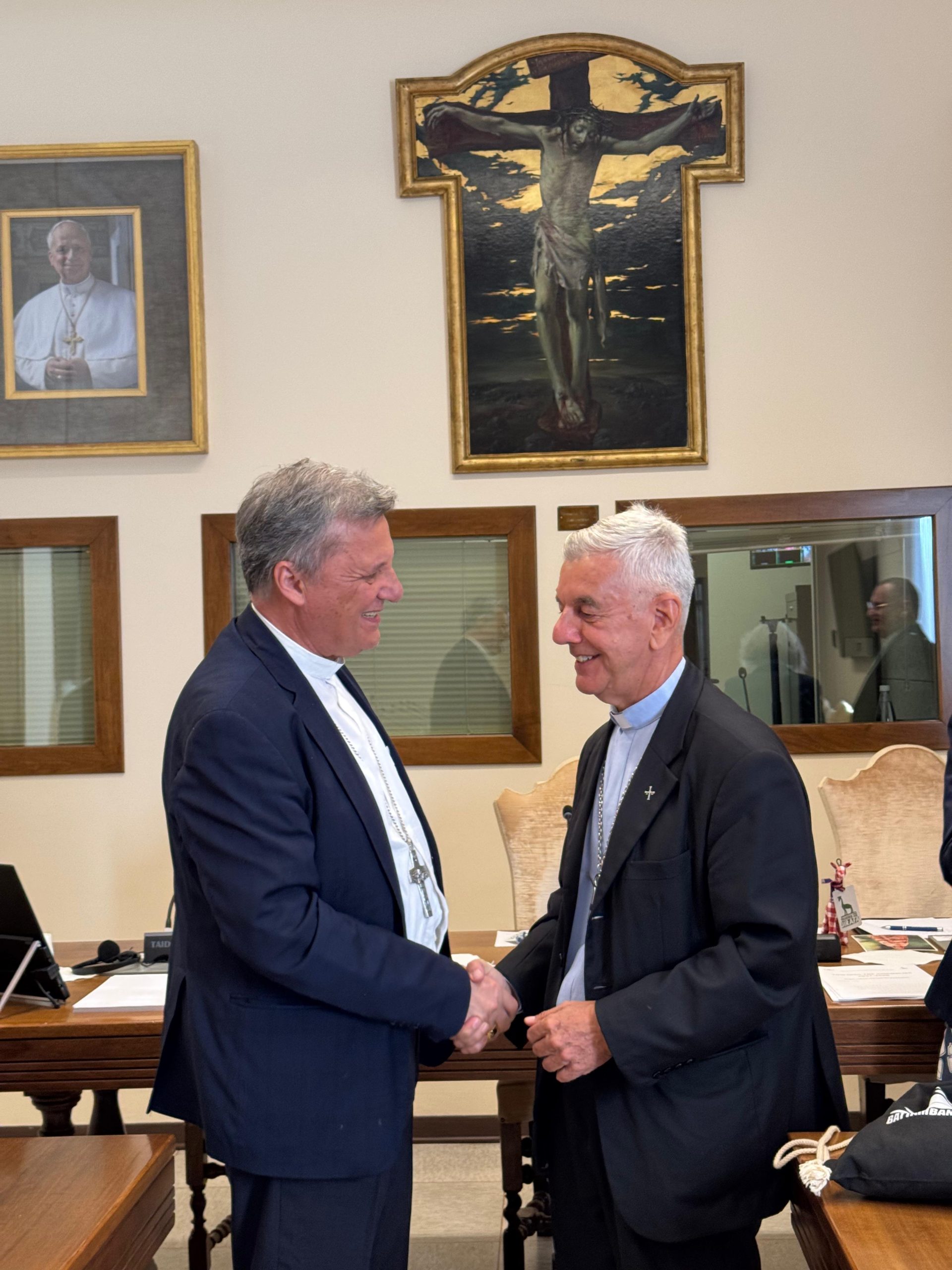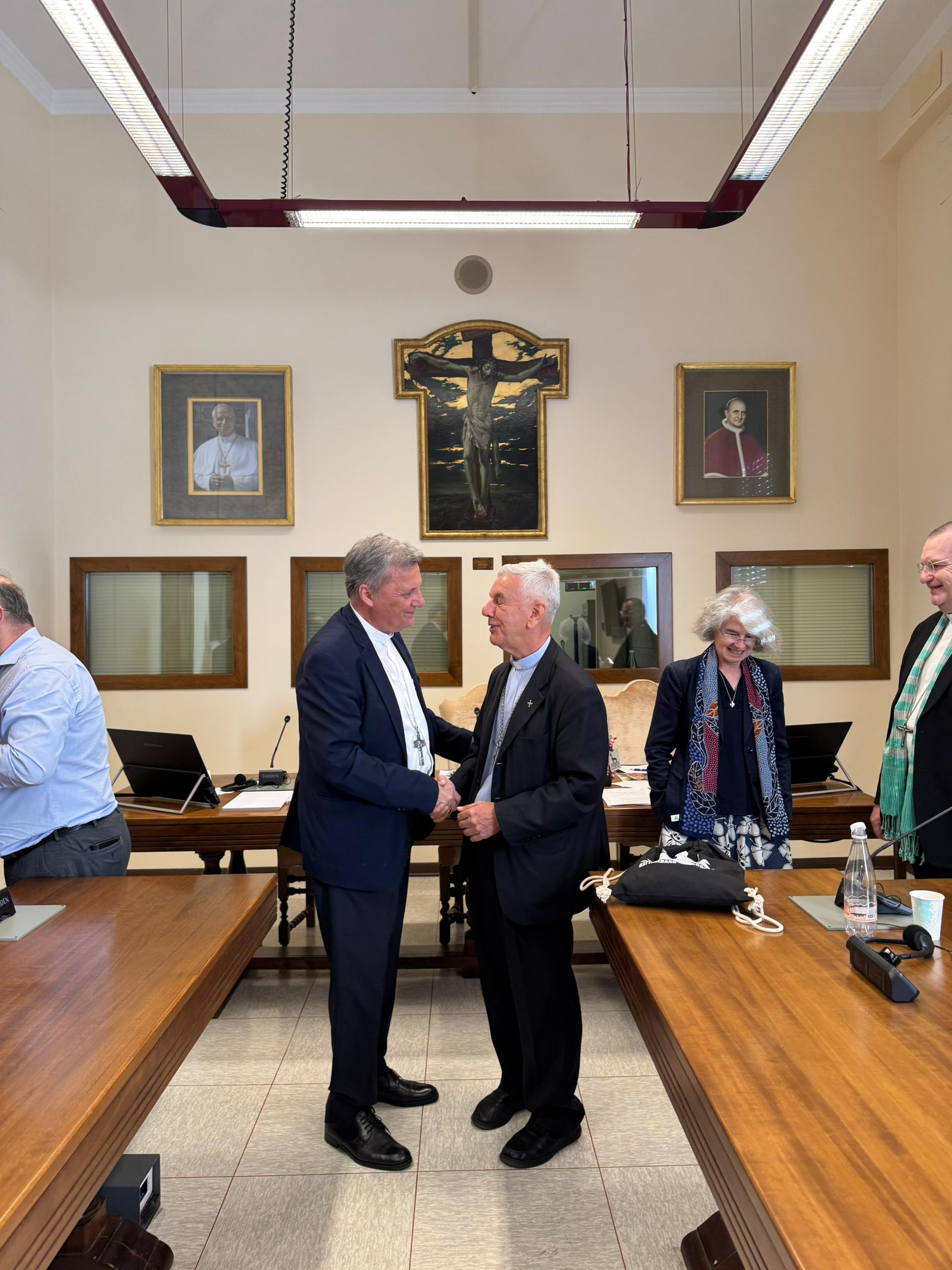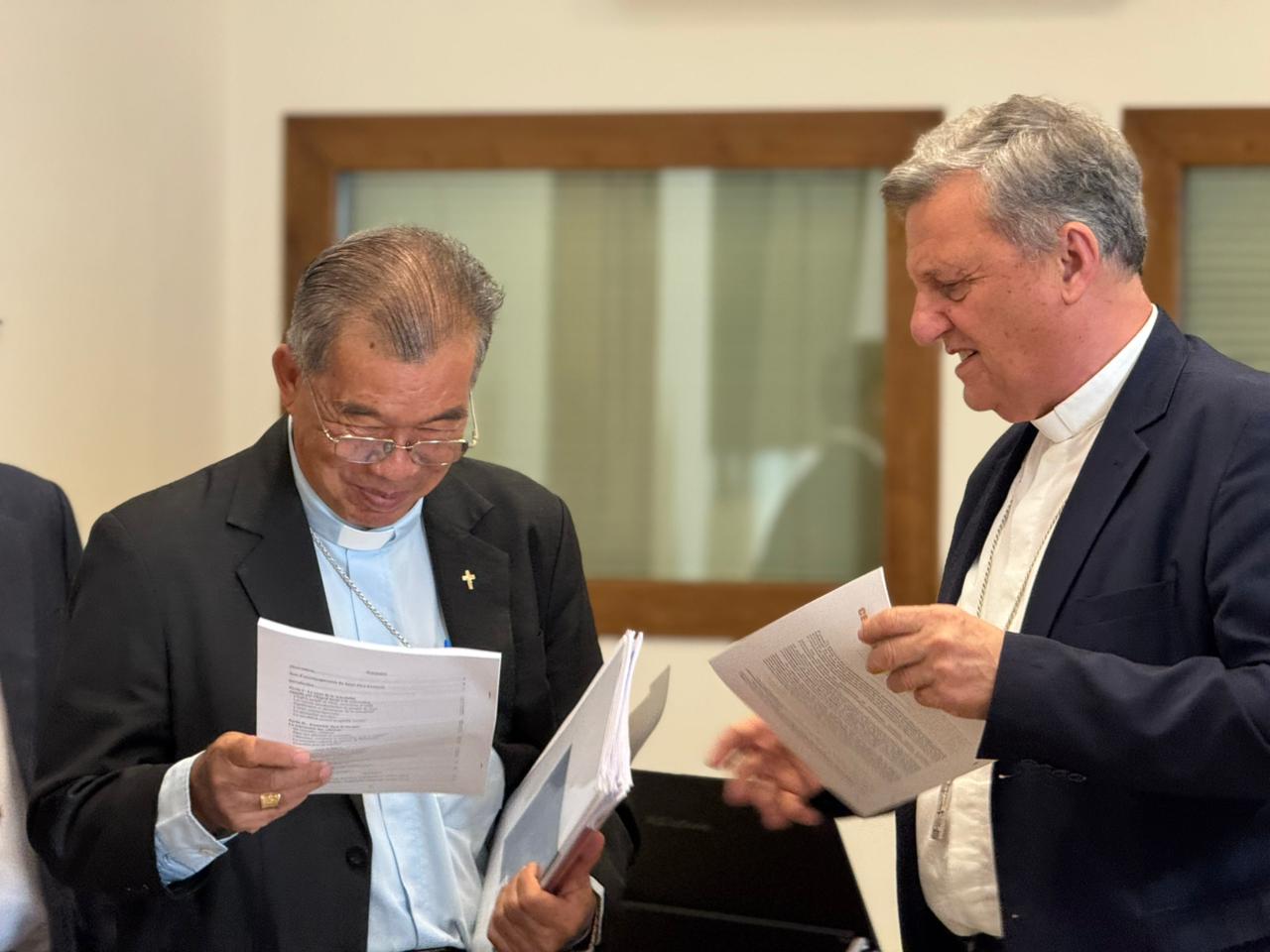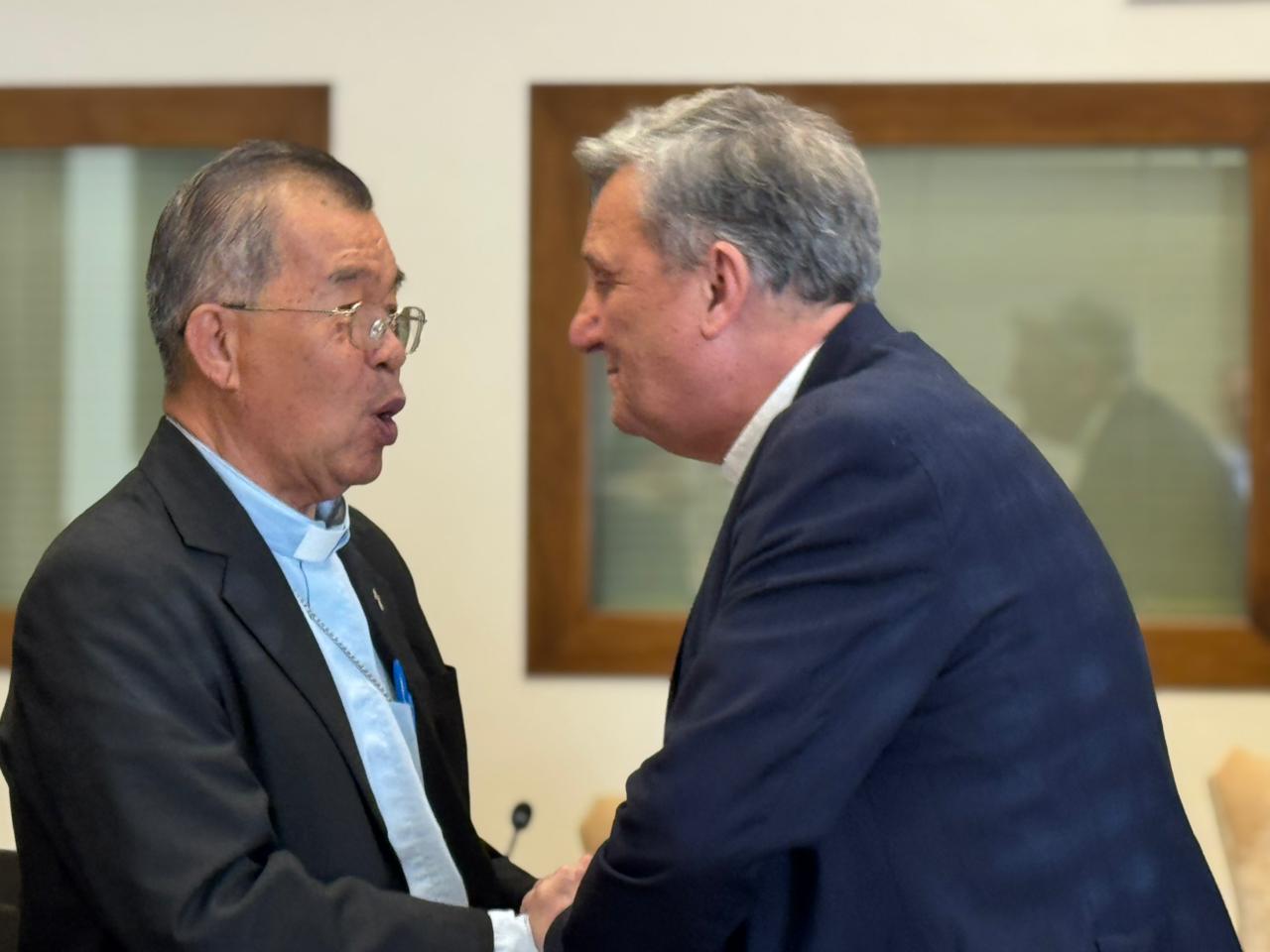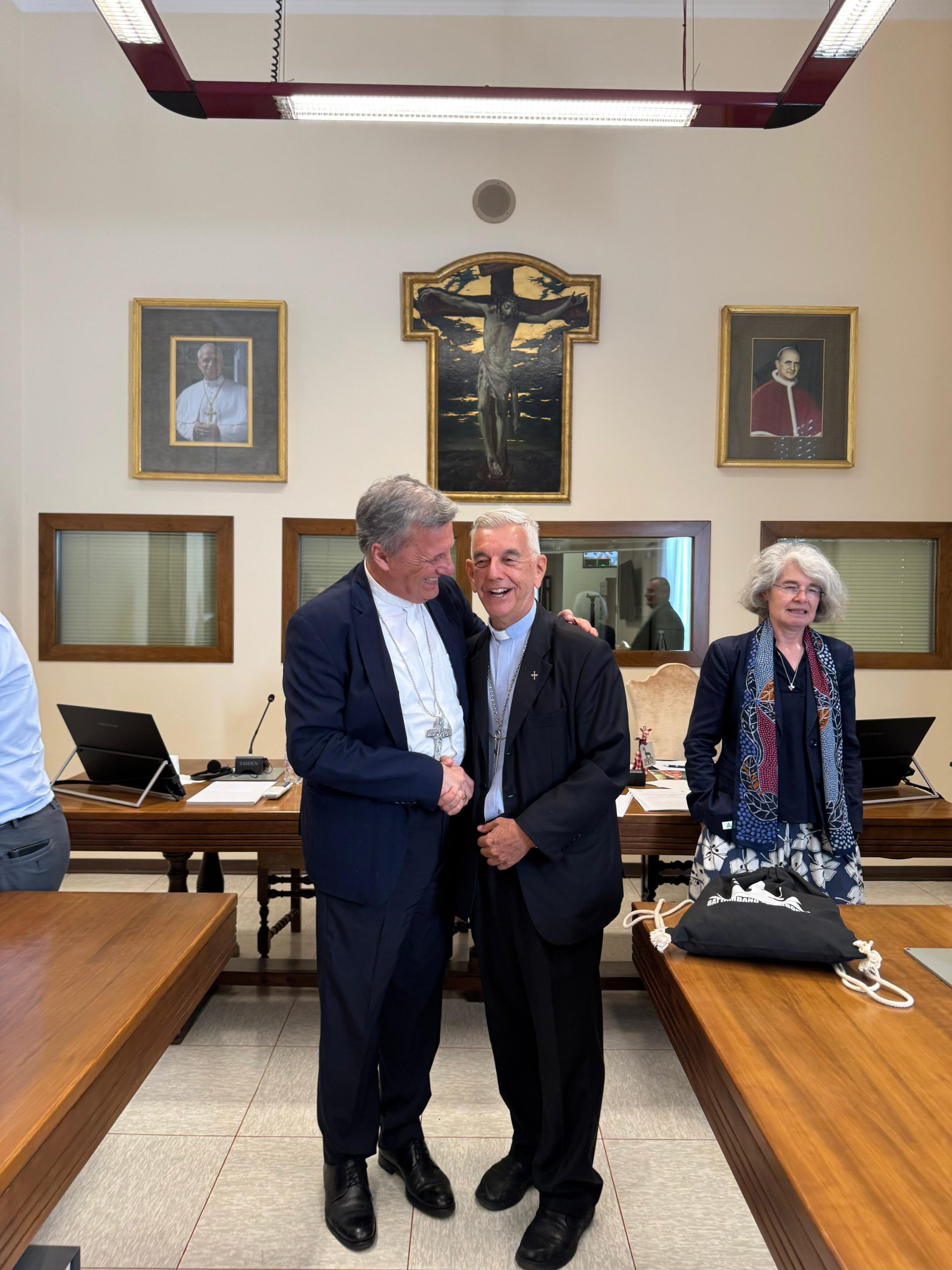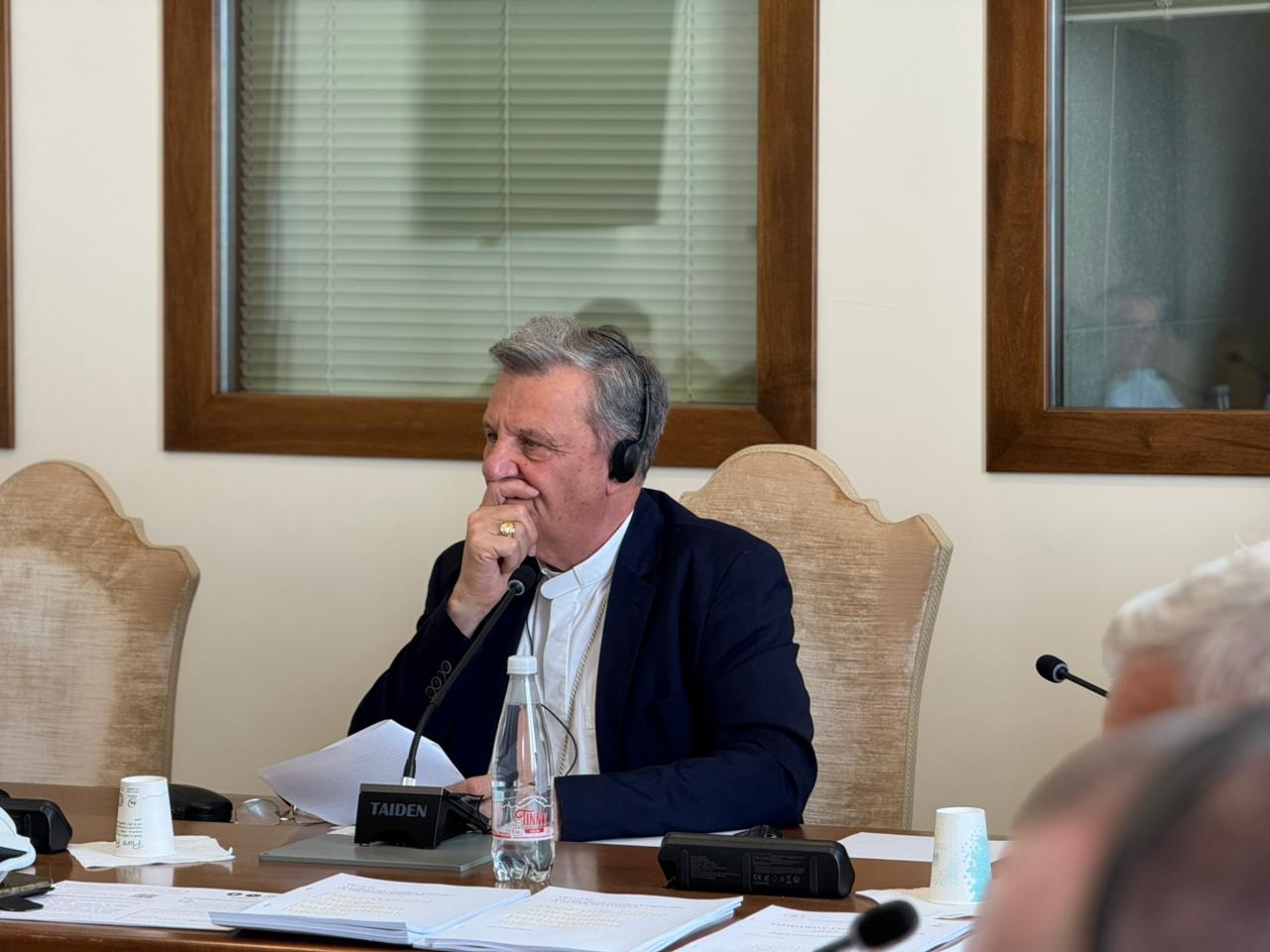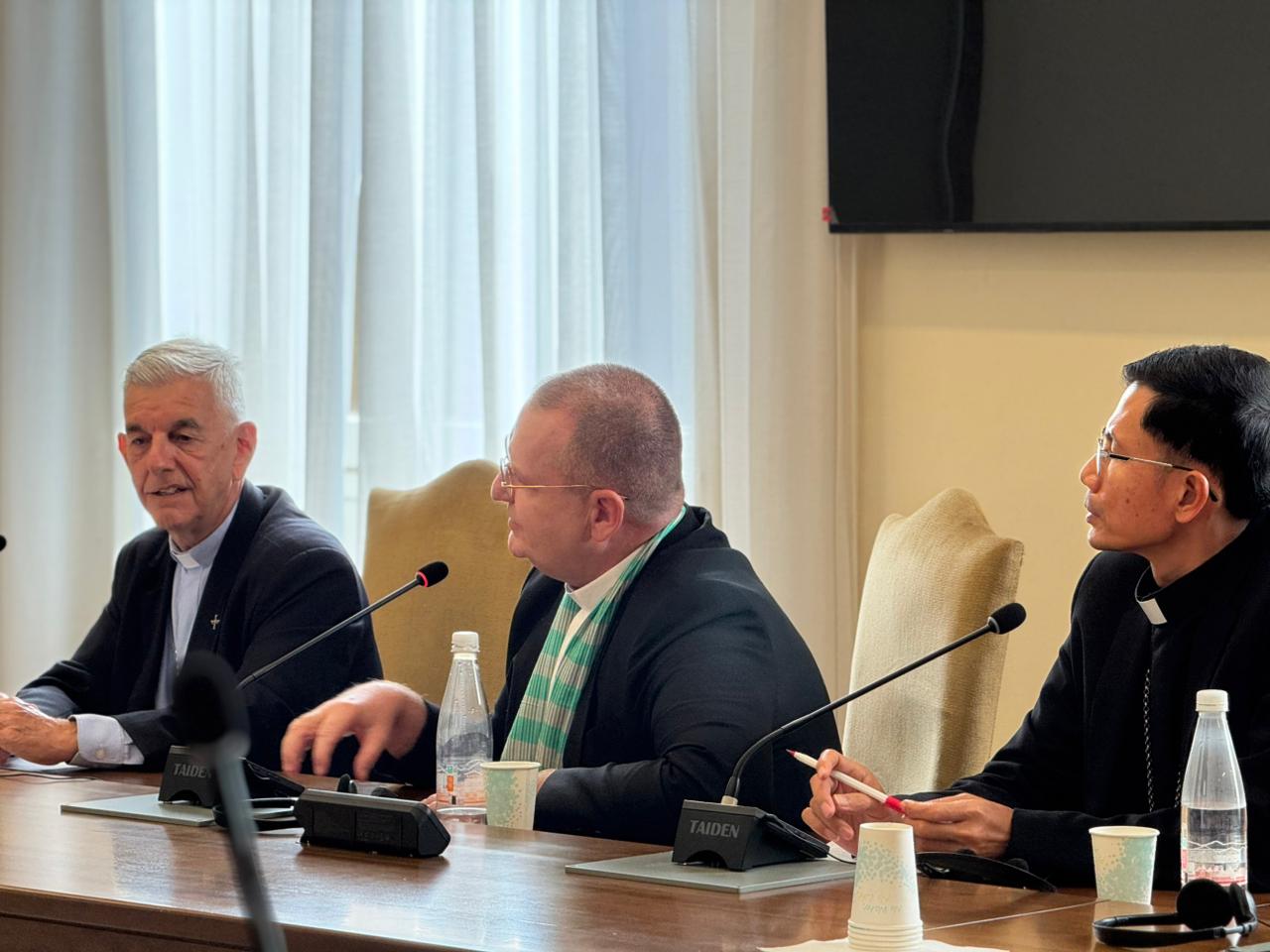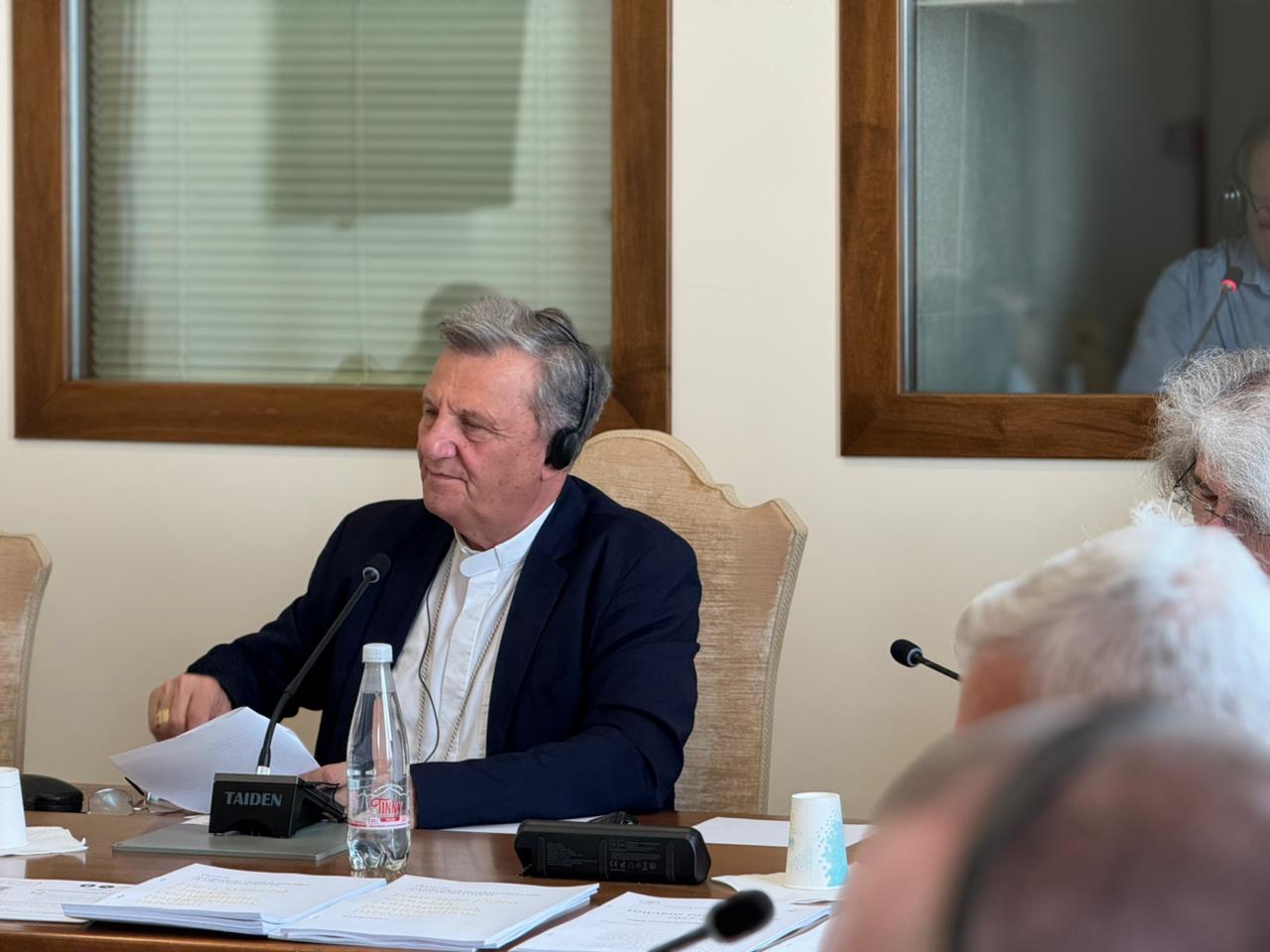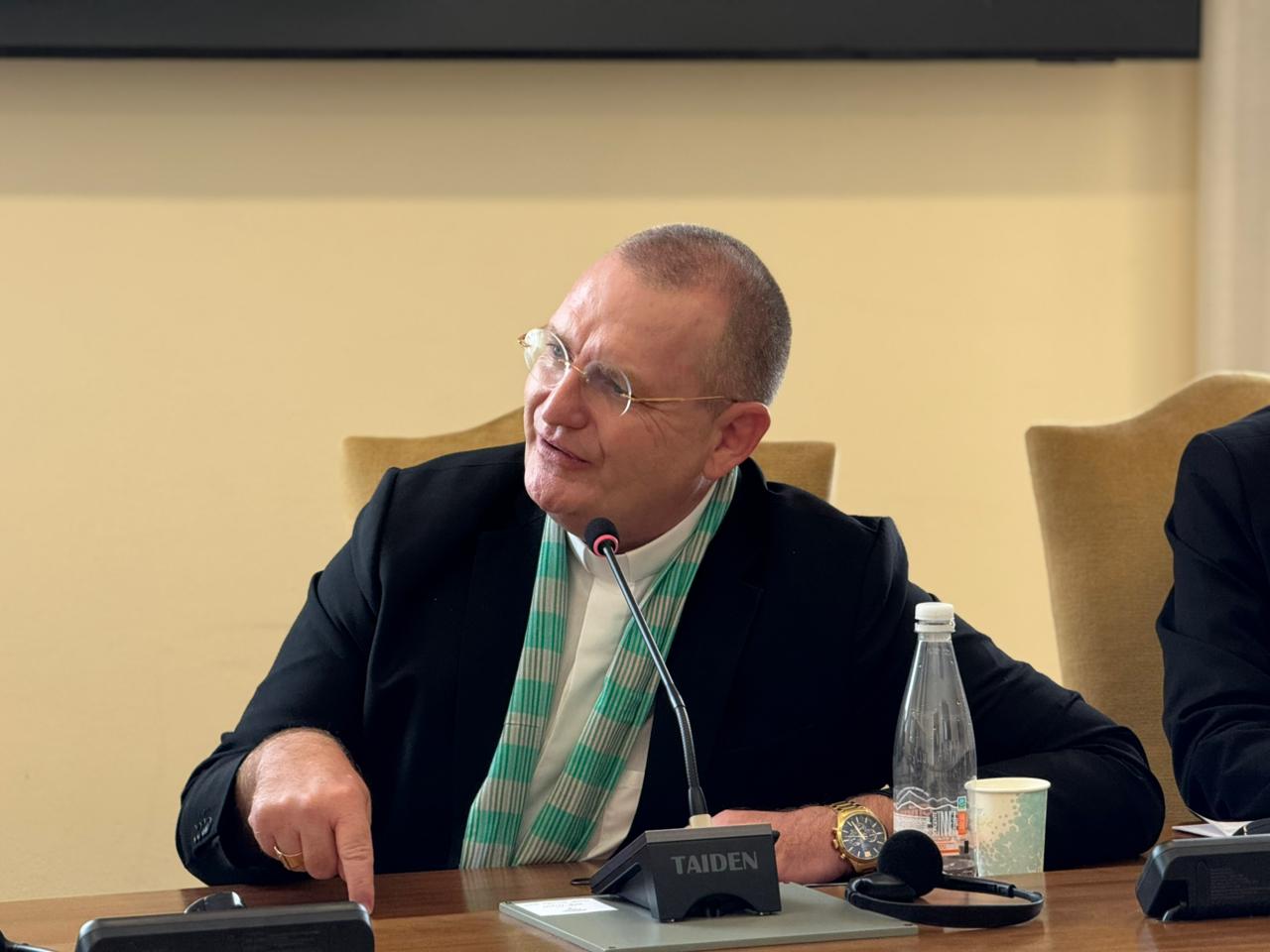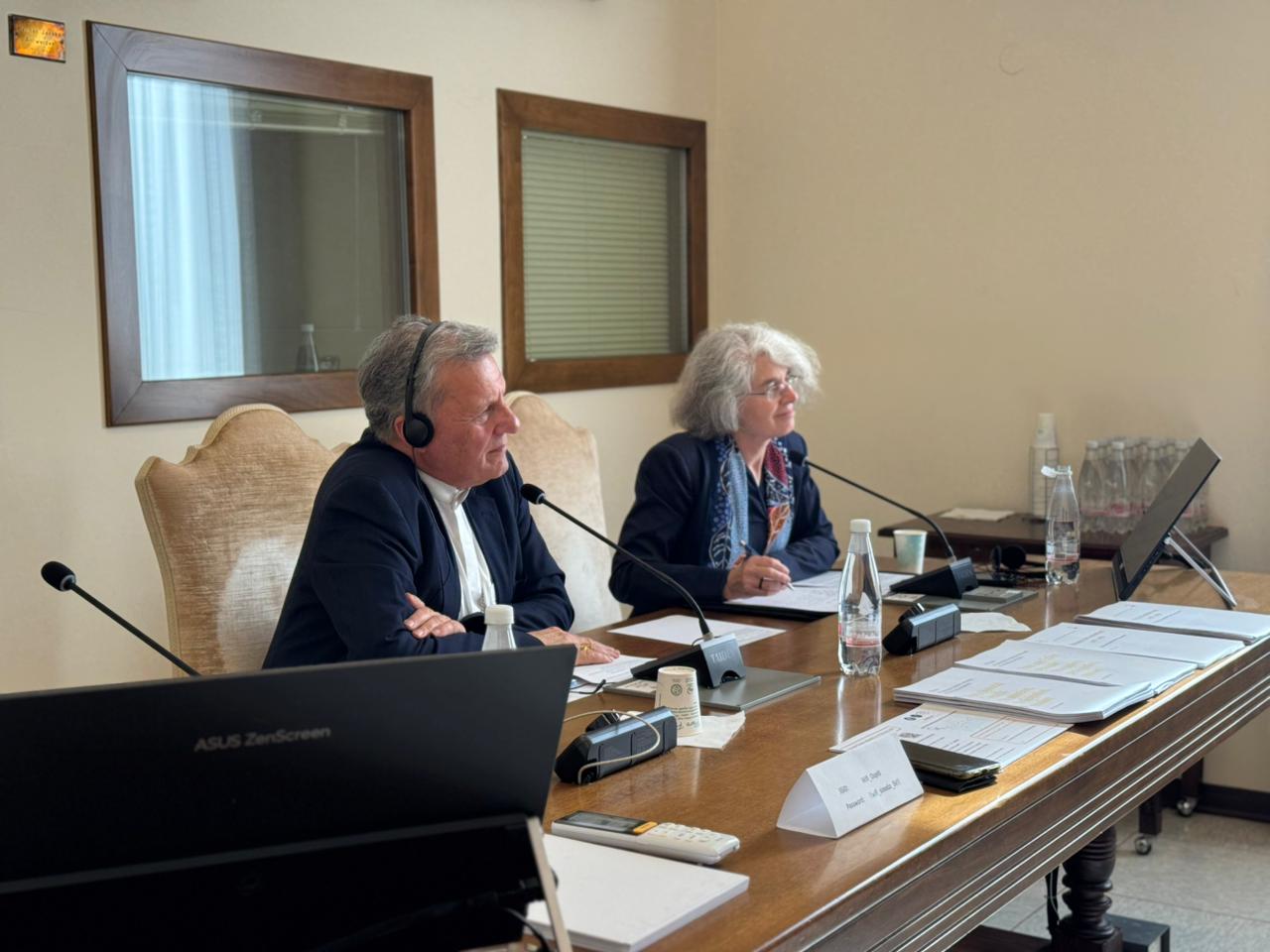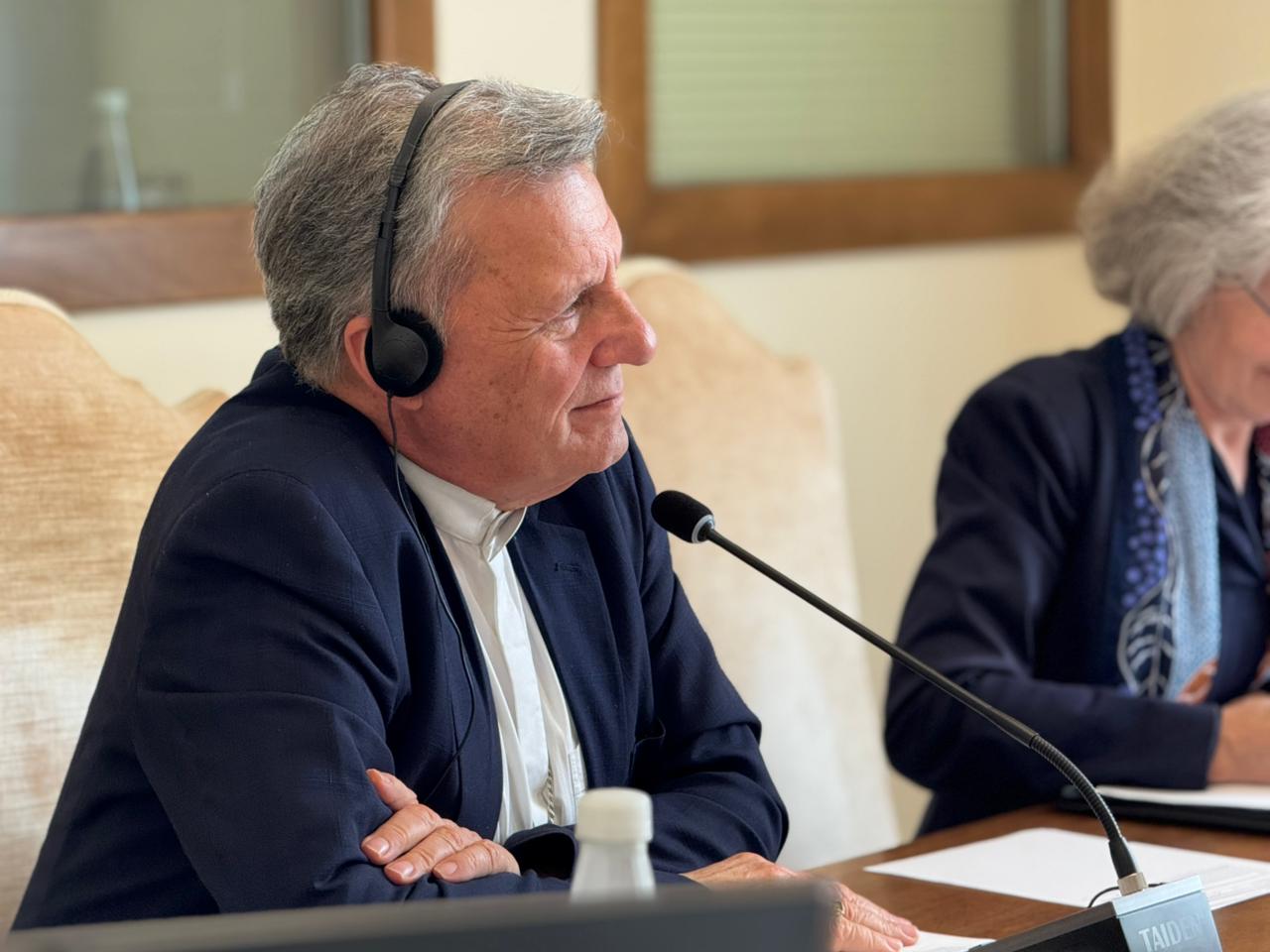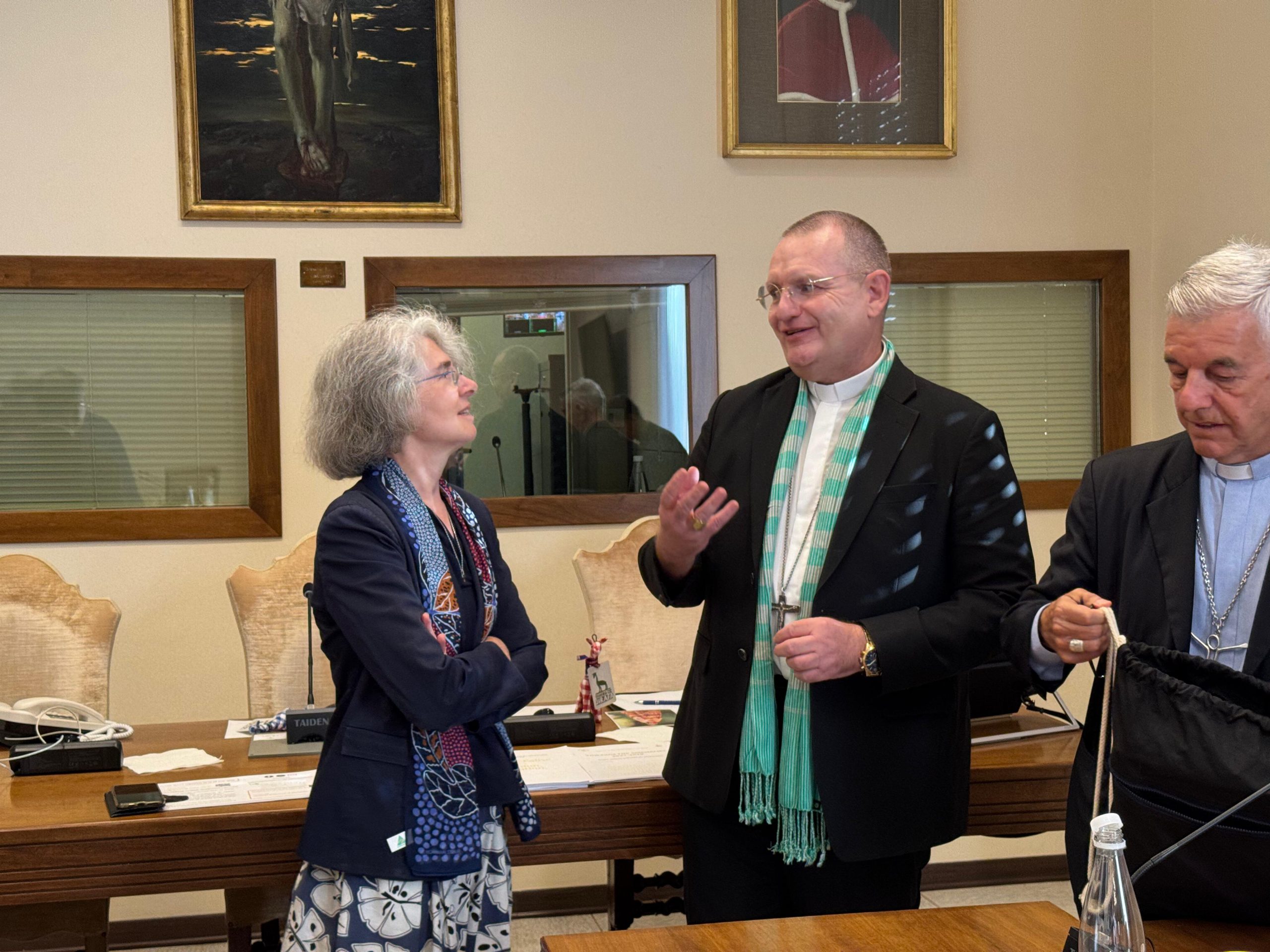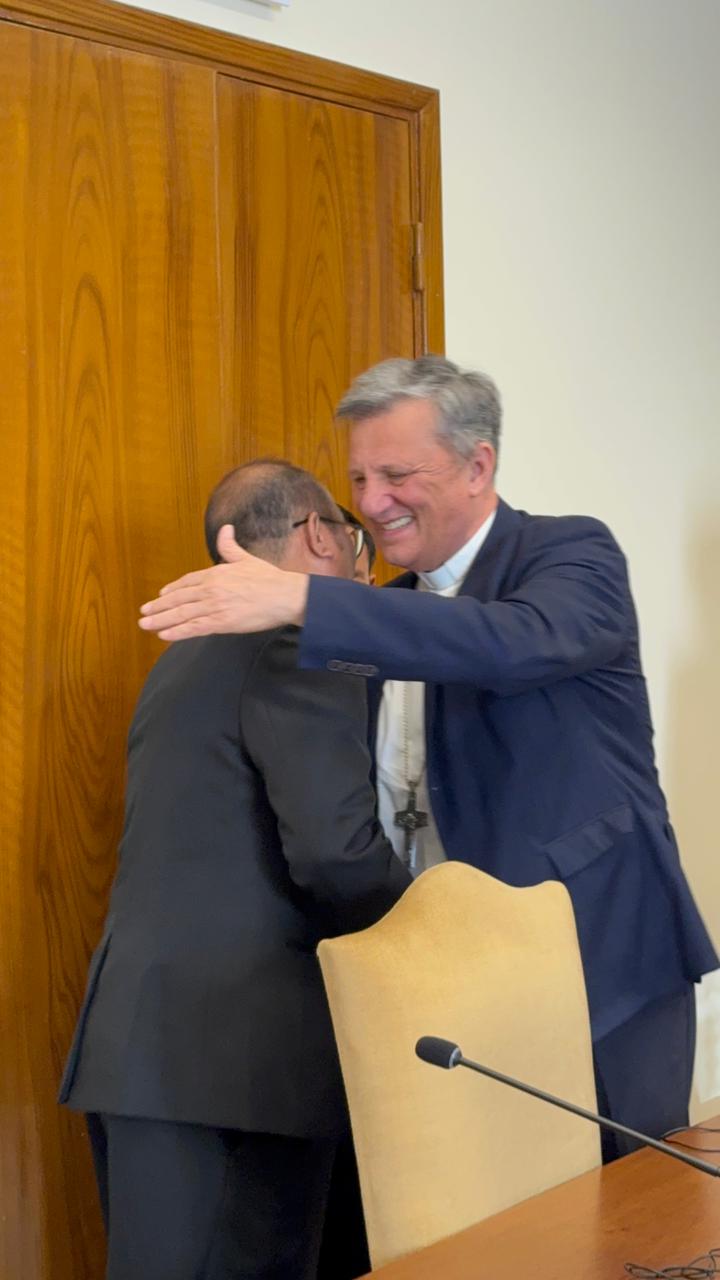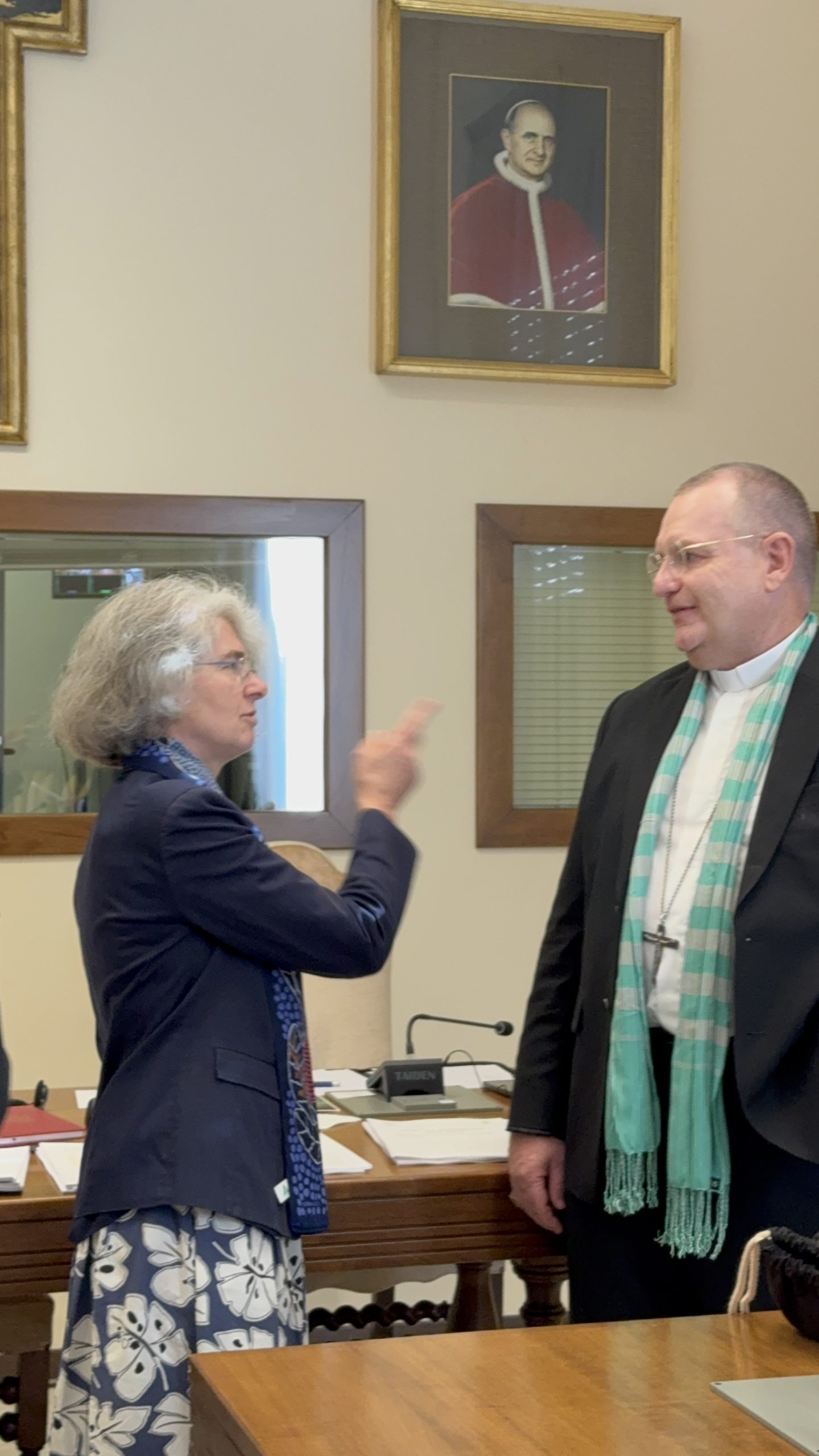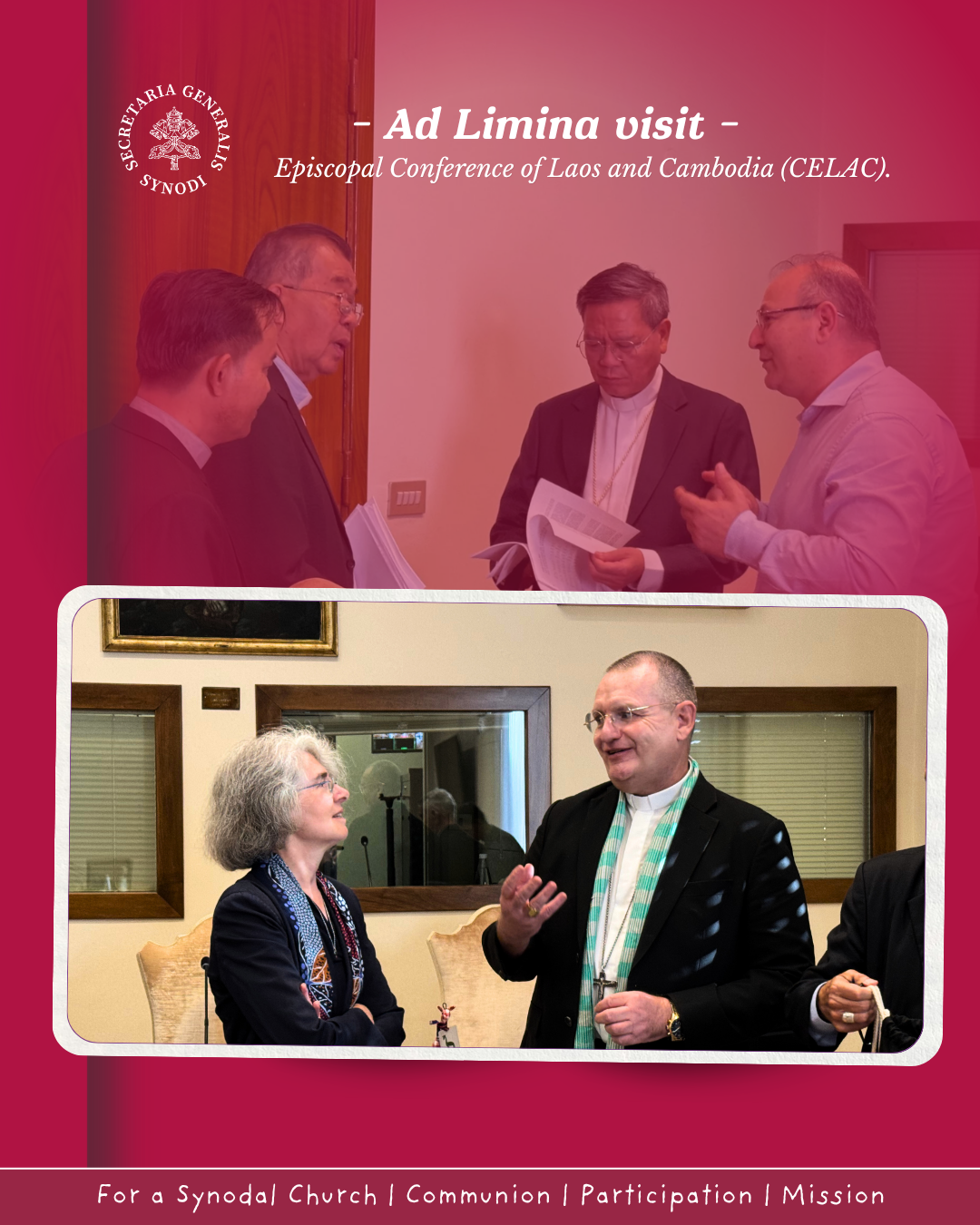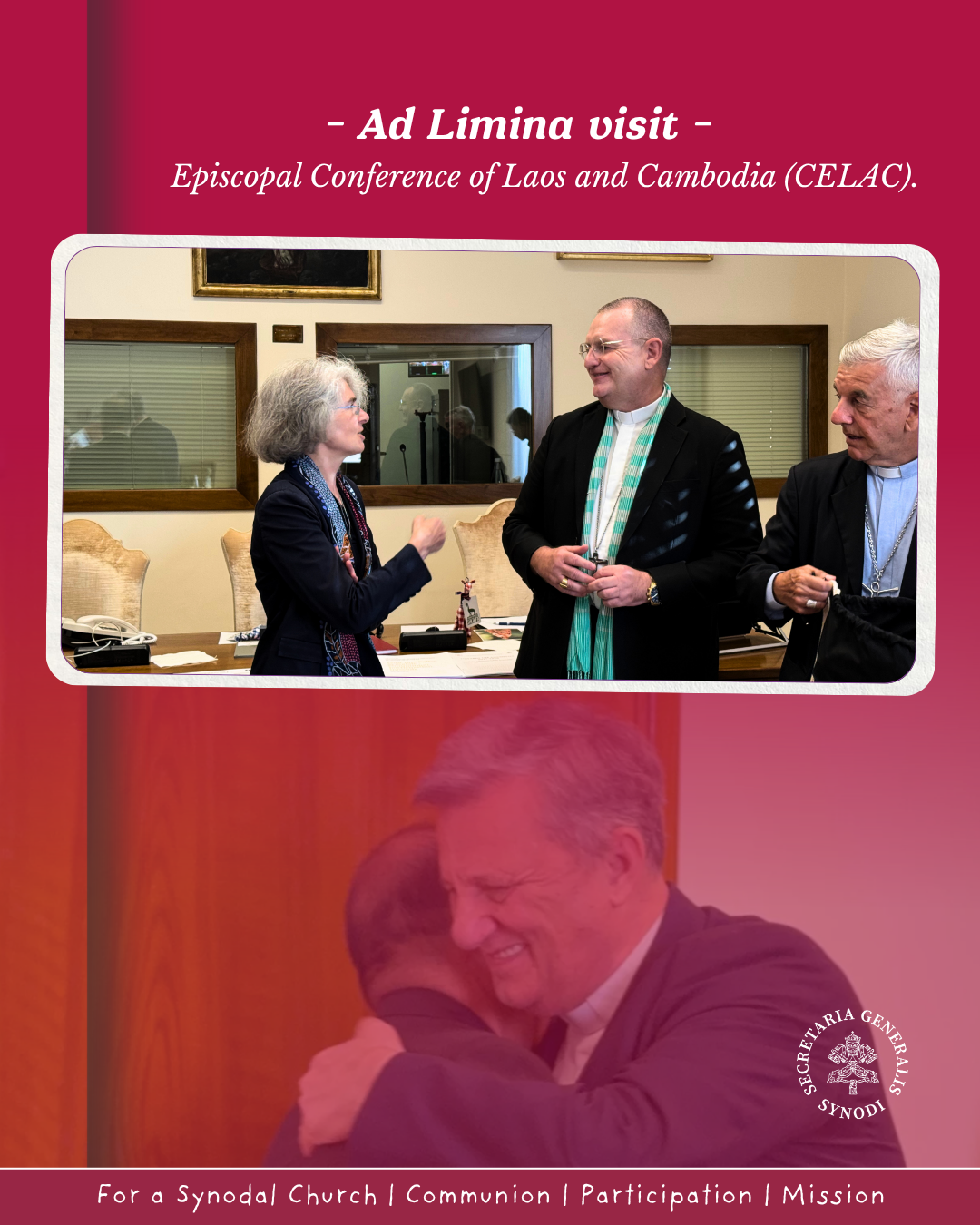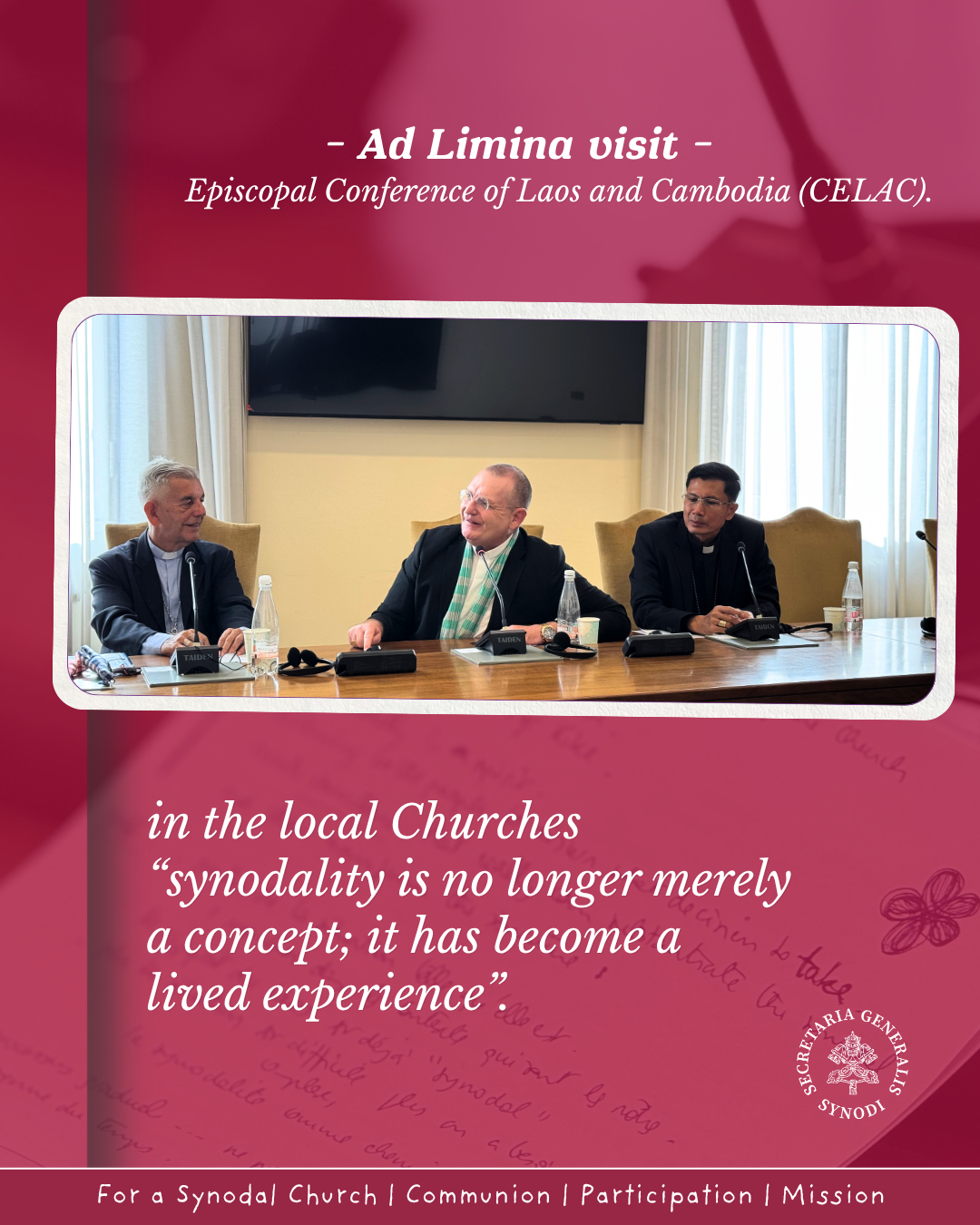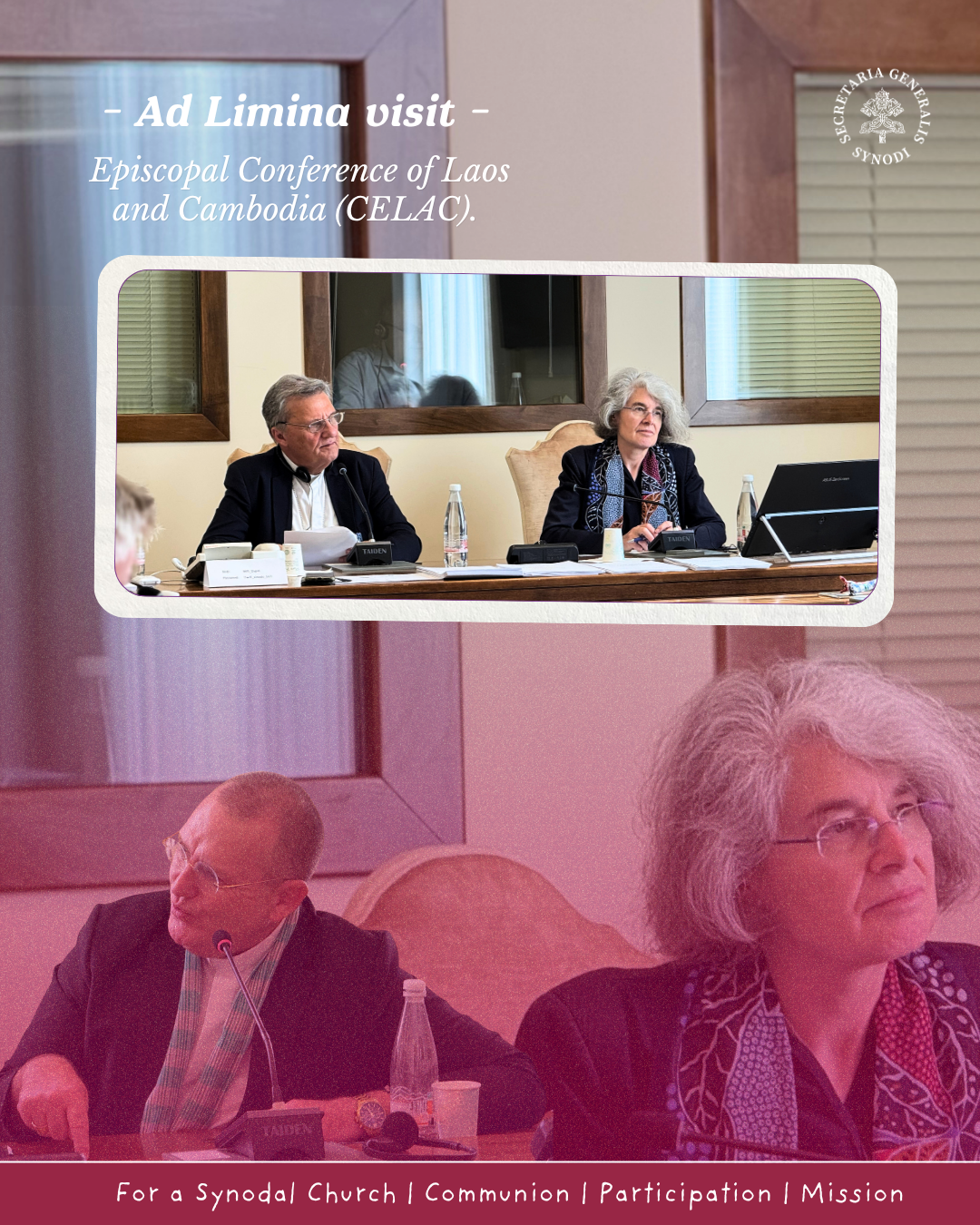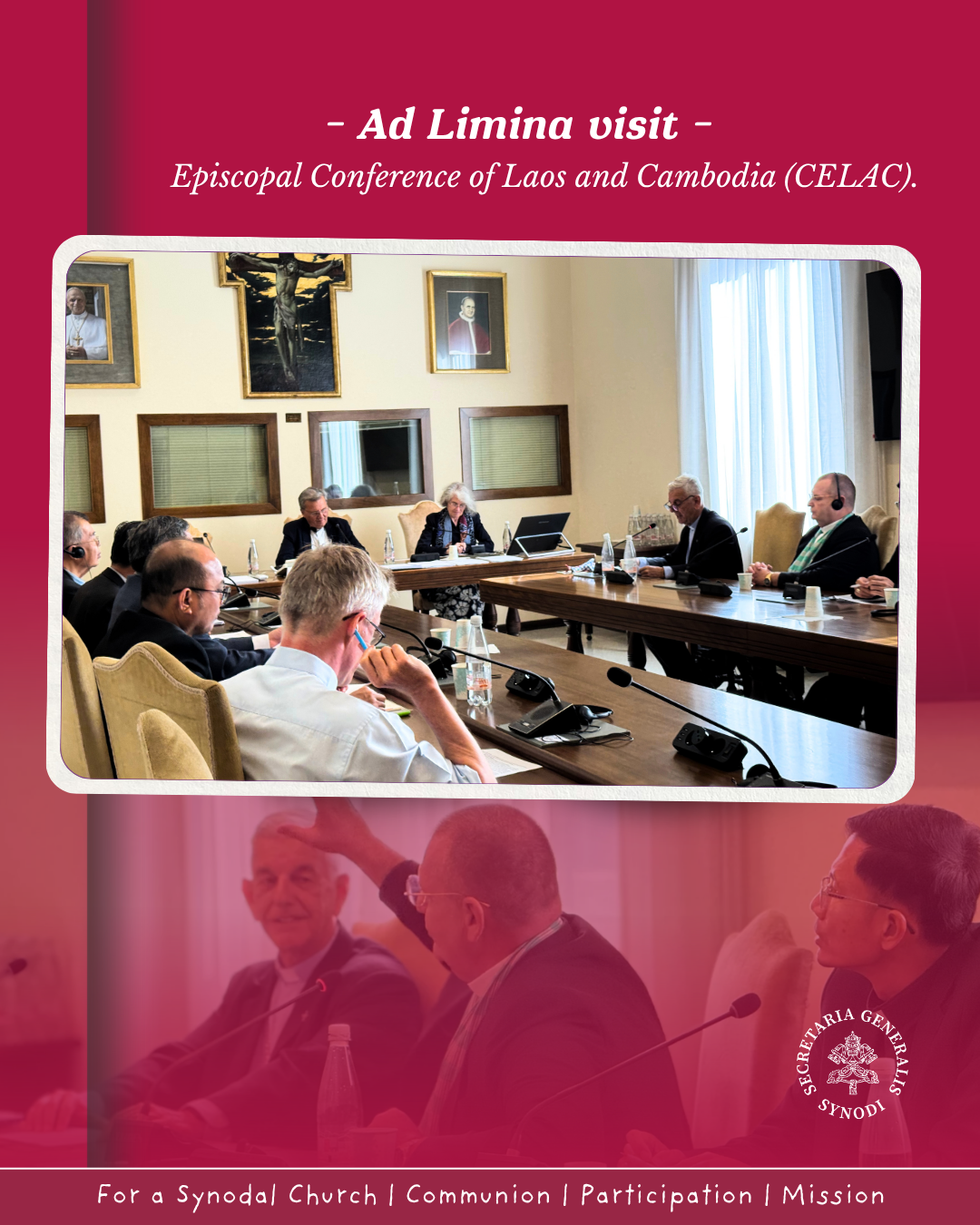
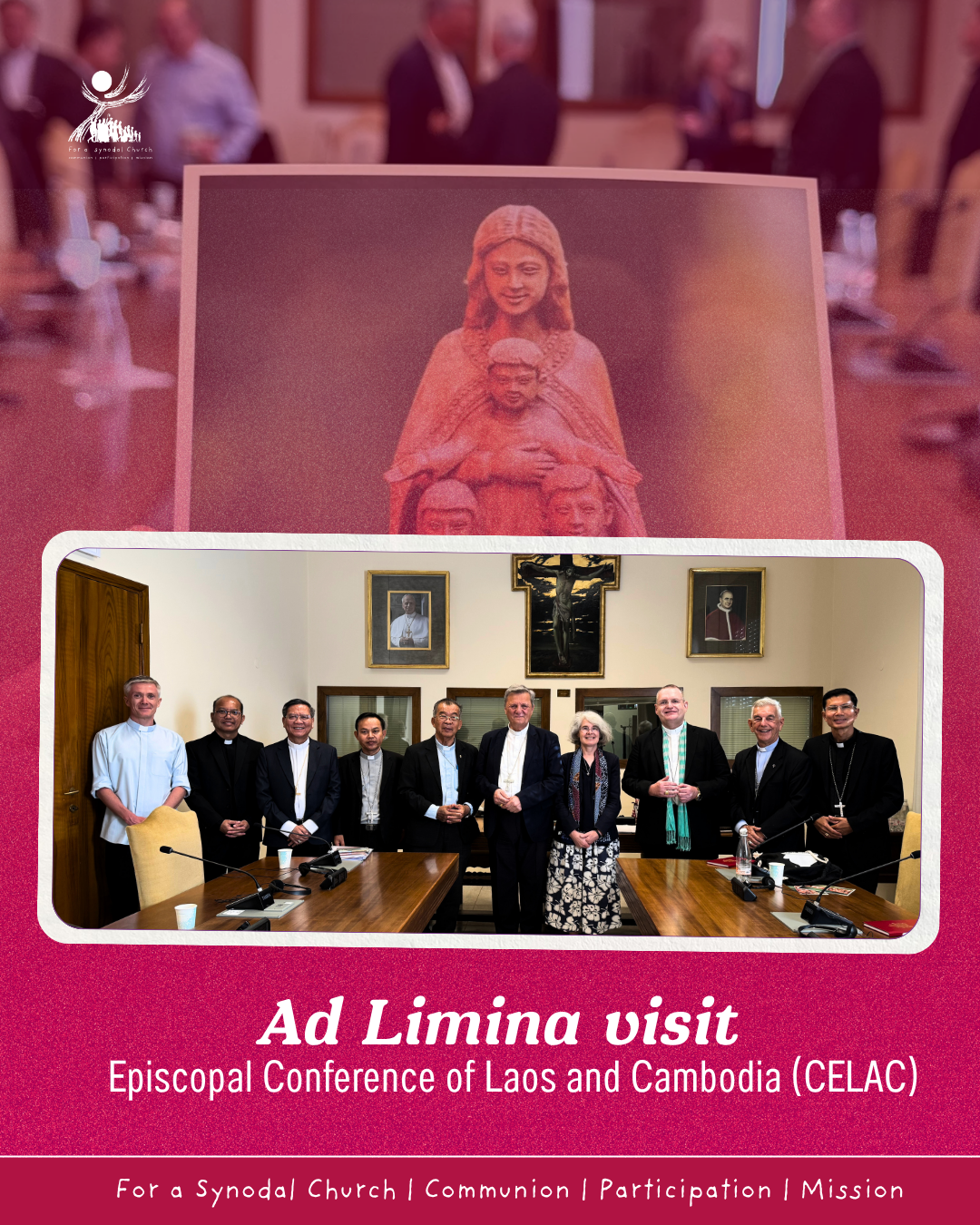
In the afternoon of Tuesday 25 May 2026, Cardinal Mario Grech and sr. Nathalie Becquart XMCJ met the Bishops of the Episcopal Conference of Laos and Cambodia (CELAC).
Guided by Mons. Enrique Figaredo Alvargonzales, SJ, Apostolic Prefect of Battambang (Cambodia) and President of CELAC, the six bishops attending the meeting addressed the theme of the synodal process and discussed the implementation process in that part of the word.
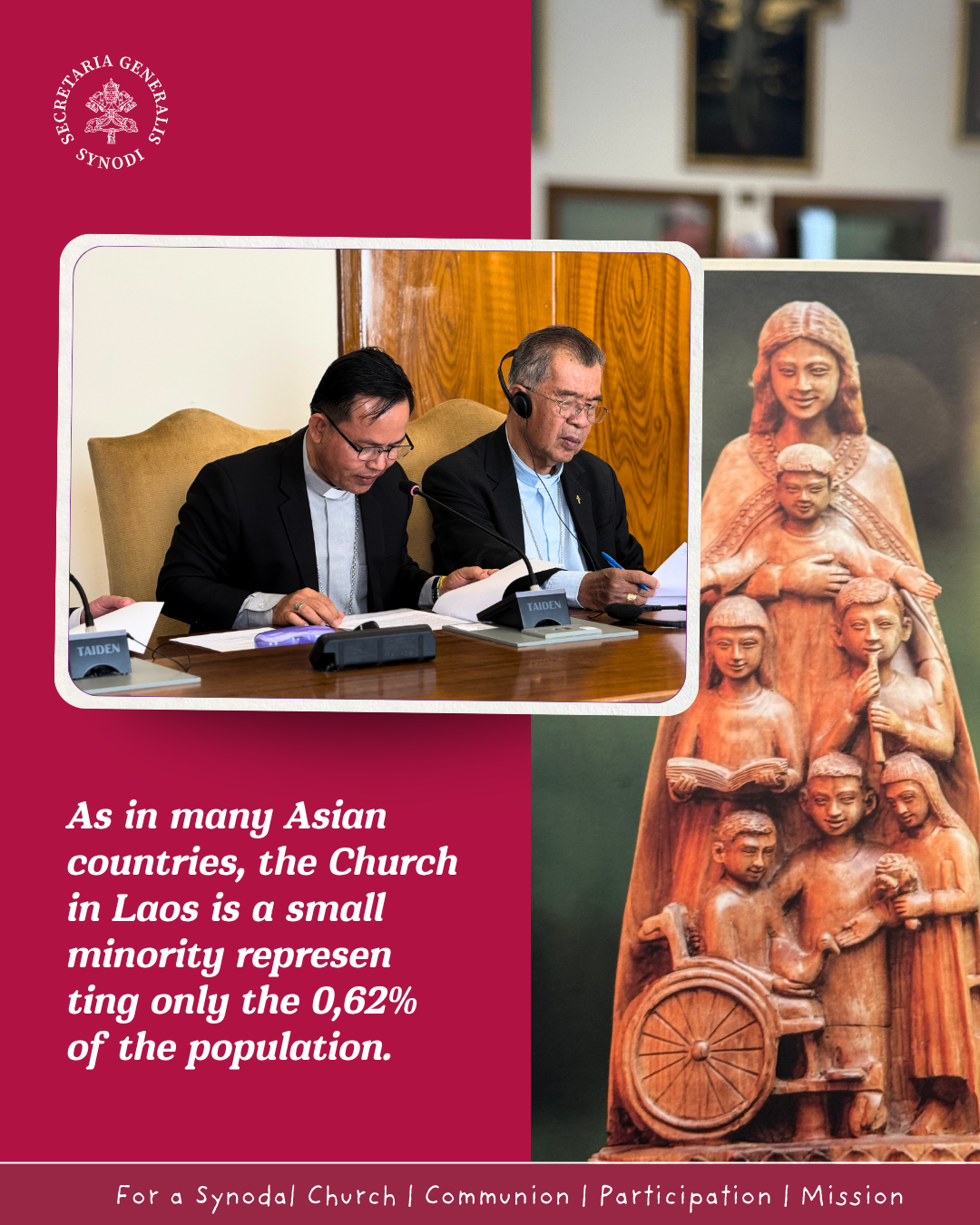
Bishop Andrew Souksawath Nouane Asa, Apostolic Vicar of Paksé (Laos) spoke about the synodal process in Laos. As in many Asian countries, the Church in Laos is a small minority representing only the 0,62% of the population. Since the beginning the local church embraced the call of Pope Francis: “even though we ourselves were not entirely sure what it would entail”, stated bishop Soukawath.
Covid-19 pandemic had influenced the process of collecting testimonies, compiling reports. Besides this was the first “synodal process” ever implemented in Laos on such a scale. “Prior to this experience, we did not really have a tradition of consulting the People of God in such a broad and participatory manner. For us, it was truly something new”, stated the bishop of Paksé.
However, “looking back, it is clear that this experience has proven to be extremely positive for many individuals and groups”, he said. According bishop Souksawath, Catholics have discovered the significance and value of “conversation in the Spirit” and have felt that they are truly part of the life and mission of the Church. The People of God have had the joy of realizing that their voice matters. “More than any other ecclesial event, this Synod helped many Catholics become aware of their responsibility within the Church in communion with their pastors”, said the bishop of Paksé. The local bishops were surprised to notice the similarity of the concerns, hopes, and desires for renewal expressed in the four vicariates. “This could have paved the way for strong, coordinated initiatives on a national scale or a common pastoral vision for our local Church”.
Although the synodal process generated genuine enthusiasm among both the clergy and the faithful, the Bishops recognize that none of the vicariates has truly followed through on the substance of these reflections in a sustainable. “In practice, we have simply continued to work as before”, they said. “Perhaps we saw the Synod more as an event to complete than as a path of renewal to continue walking together. To acknowledge this before you today is, for us, a way of expressing our desire to reopen this issue and to discern how we can develop a true synodal spirit”.
Concerning Cambodia, Mons. Enrique Figaredo Alvargonzales, SJ, Apostolic Prefect of Battambang (Cambodia) and President of CELAC stressed the fact that in their local Churches “synodality is no longer merely a concept; it has become a lived experience”. He recalled how during the diocesan and continental phases, the people of God engaged in profound listening and discernment. “We discovered a deep hunger for participation, especially among the laity, our youth, and women. We are learning—sometimes slowly and imperfectly, but always with the guidance of the Holy Spirit—what it means to "walk together" as a missionary Church. This synodal renewal has been a vital resource in addressing our local challenges” he concluded.
Despite economic hardship and the lingering impacts of border conflicts has influenced the synodal process, “these challenges are not just obstacles; they have become focal points for communal discernment. Our clergy and lay faithful are working collaboratively to weave deeper relationships, build bridges of dialogue, and extend the compassionate hand of Christ to those who suffer”.
This is the reason why the local Churches are engaged in empowering the marginalized, healing and rebuilding communities: “The synodal process has pushed us to place the abandoned, the disabled (such as survivors of past violence), and marginalized minority groups at the heart of our mission […] As a young Church emerging from the ashes of destruction, communal discernment allows us to address real-world needs. Operating mutual aid and Sangkaha committees across local villages to identify vulnerable families”, stated the bishops.
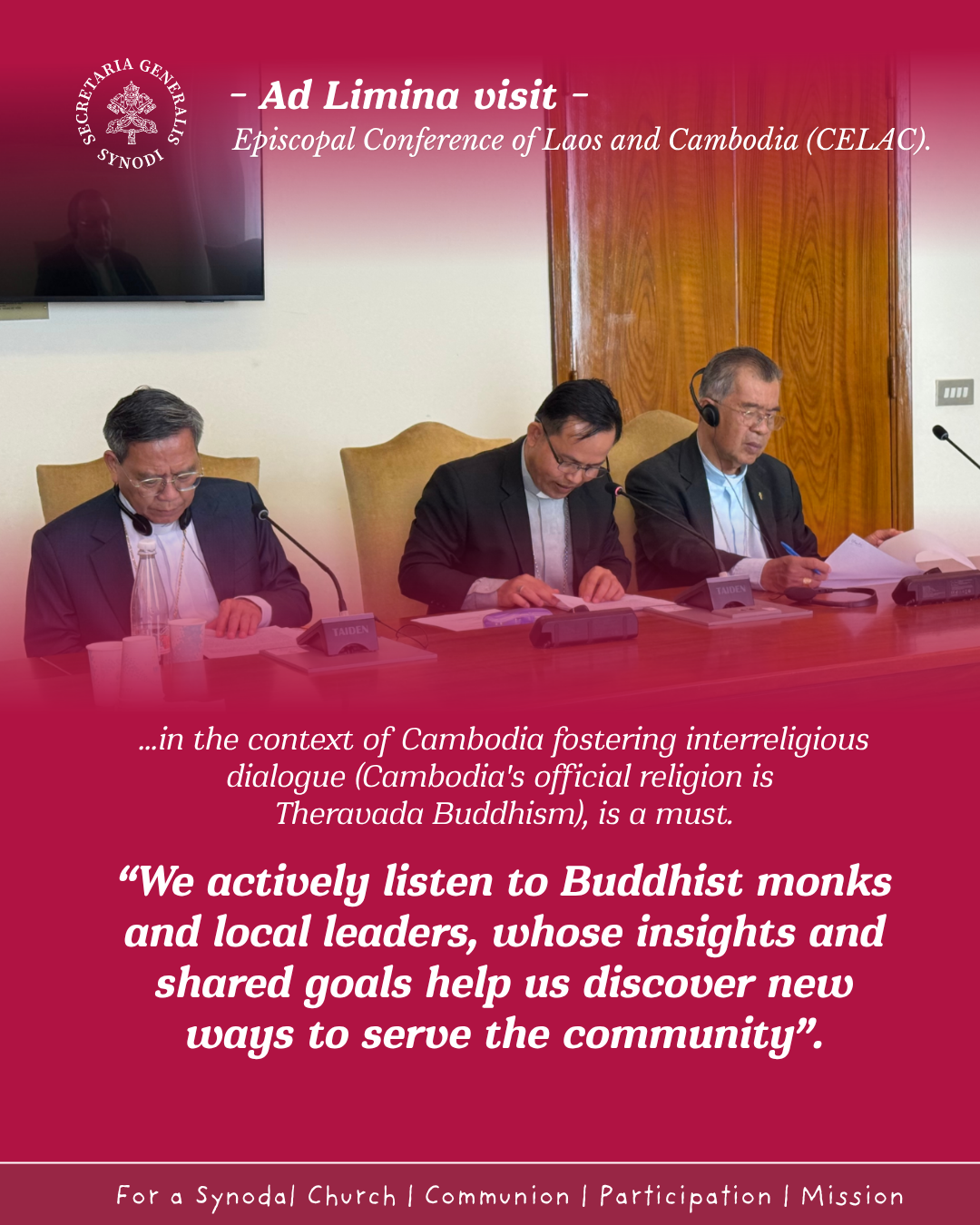
Finally, in the context of Cambodia fostering interreligious dialogue (Cambodia's official religion is Theravada Buddhism), is a must. “We actively listen to Buddhist monks and local leaders, whose insights and shared goals help us discover new ways to serve the community”.
On behalf of all the bishops present in Rome, the President of the Bishop Conference concluded the meeting with the following words “as the universal Church enters the implementation phase, we are committed to embedding this new style of communion, participation, and mission into the very structures of our dioceses and parishes. We view synodality not just as an internal ecclesial method, but as a vital contribution to the humanization of our broader society”.
At the end of the meeting, the bishops of Laos and Cambodia presented the leaders and officials of the General Secretariat with an image of Our Lady of Inclusion as a token of appreciation for their work in supporting the small local churches.