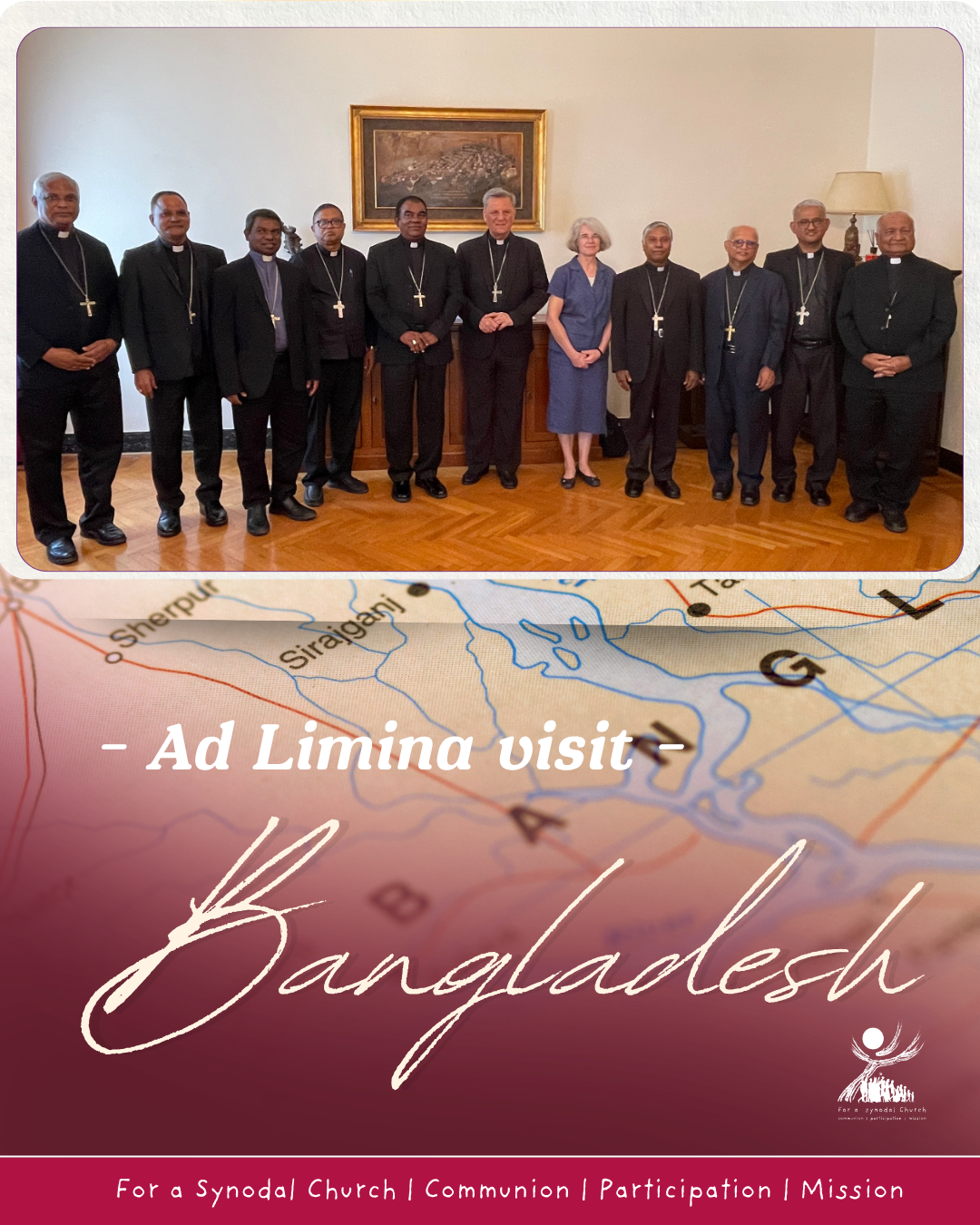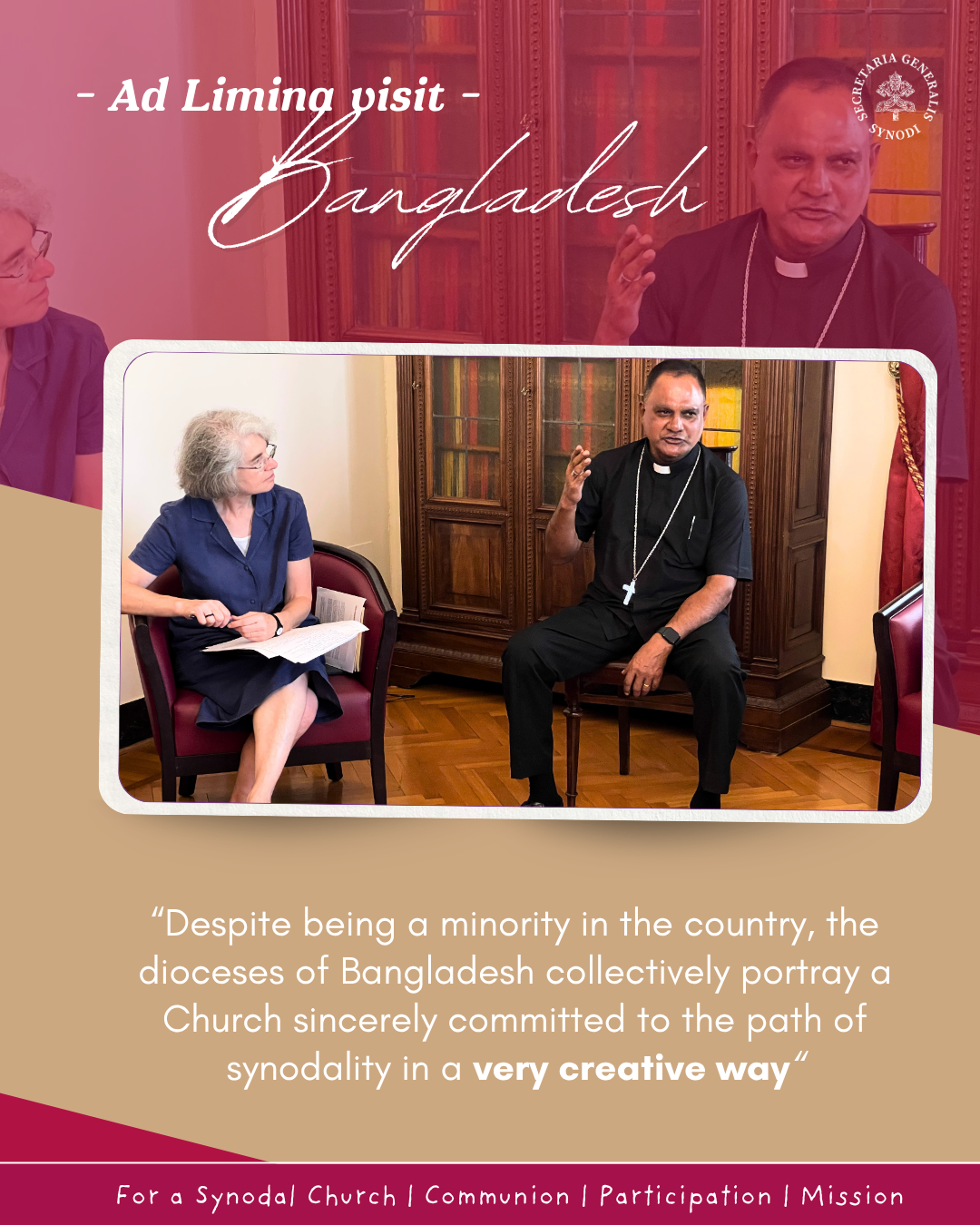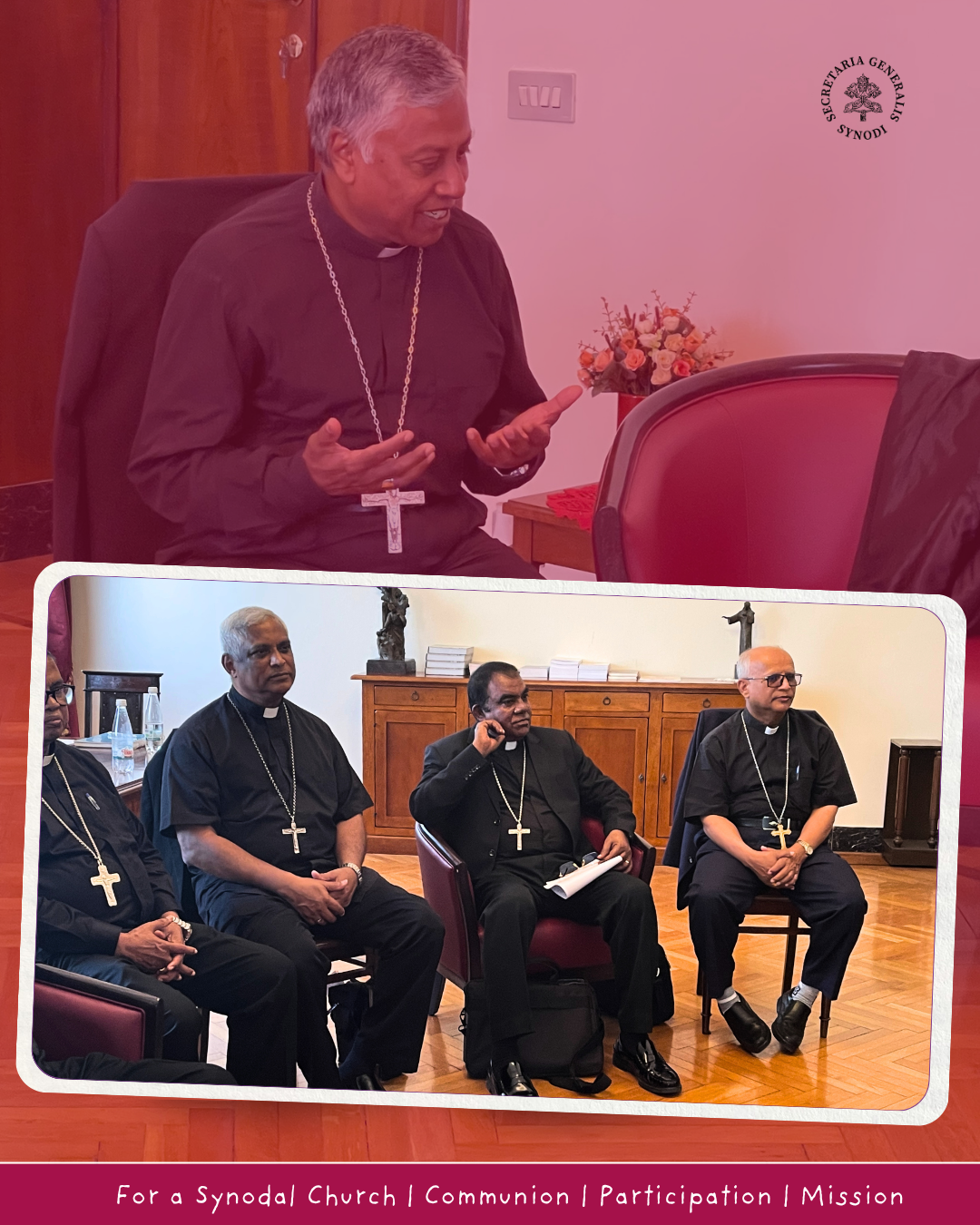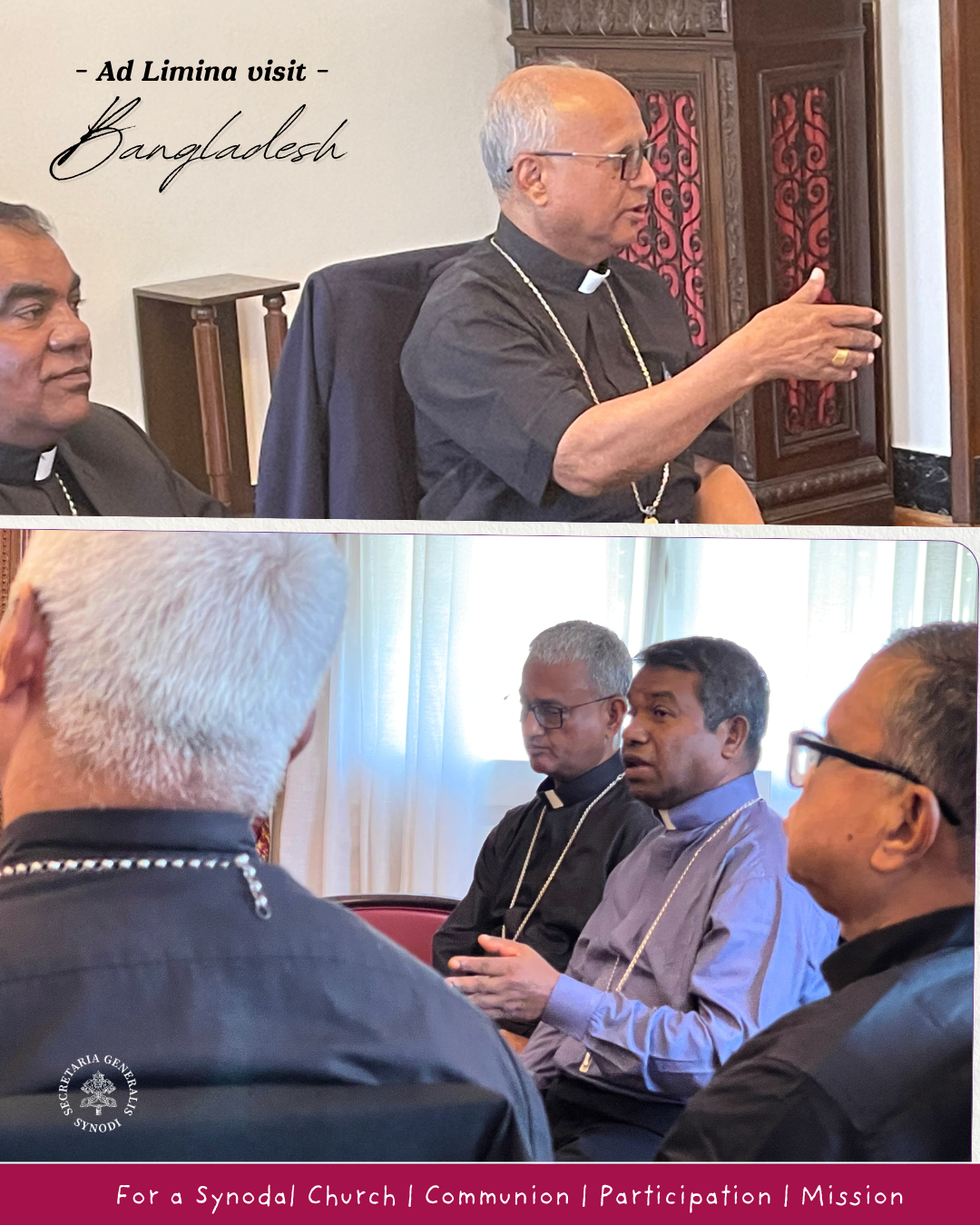
Late in the morning of June 22, Cardinal Mario Grech and sr. Nathalie Becquart, XMCJ met with the Bishops of Bangladesh in Rome for their ad limina visit.
On behalf of all the bishops, Mons. Emmanuel K. Rozario, bishop of Barisal presented the synodal journey of the local Church.
The Catholic Church in Bangladesh is steadily growing as a synodal Church. The reports from the Archdiocese of Dhaka and Chattogram, and the Dioceses of Sylhet, Khulna, Mymensingh, Barishal, and Rajshahi, Dinajpur together portray a Church in transition toward a more synodal identity, deeply rooted in Vatican II ecclesiology while responding to the pastoral realities of Bangladesh.
The dioceses consistently highlighted the importance of Small Christian Communities (SCCs/BCCs), family prayer, Bible sharing, parish assemblies, Lectio Divina, and "Conversation in the Spirit" as foundations for synodal spirituality and ecclesial renewal.
The dioceses have already implemented several participatory structures and practical initiatives to foster synodality. Parish structures are becoming more consultative, participatory, and mission-oriented. Accountability is extending beyond financial management to include pastoral evaluation and transparency. Even episcopal collegiality and inter-diocesan collaboration are described as vibrant and supportive.
However, dioceses also identified several persistent tensions and challenges, such as resistance and indifference from the priests in some cases, Clericalism and continued dependence on clergy for decision-making, resistance to participatory leadership, difficulty translating and fully understanding the concept of synodality, limited formation opportunities and shortage of trained facilitators and pastoral agents.
Poverty, illiteracy, migration, and geographical isolation is also limiting participation.
All dioceses identified formation as a major priority for the future. Synodal teams now exist at diocesan and parish levels. They feel the need to grow in coordination regarding migration, indigenous ministry, poverty, climate concerns, and interreligious harmony.
Despite being a minority in the country, the dioceses of Bangladesh collectively portray a Church sincerely committed to the path of synodality in a very creative way.