Have you found yourself in a difficult situation where tensions arise in a group, and you are not sure how to overcome them guiding opponents toward peace?
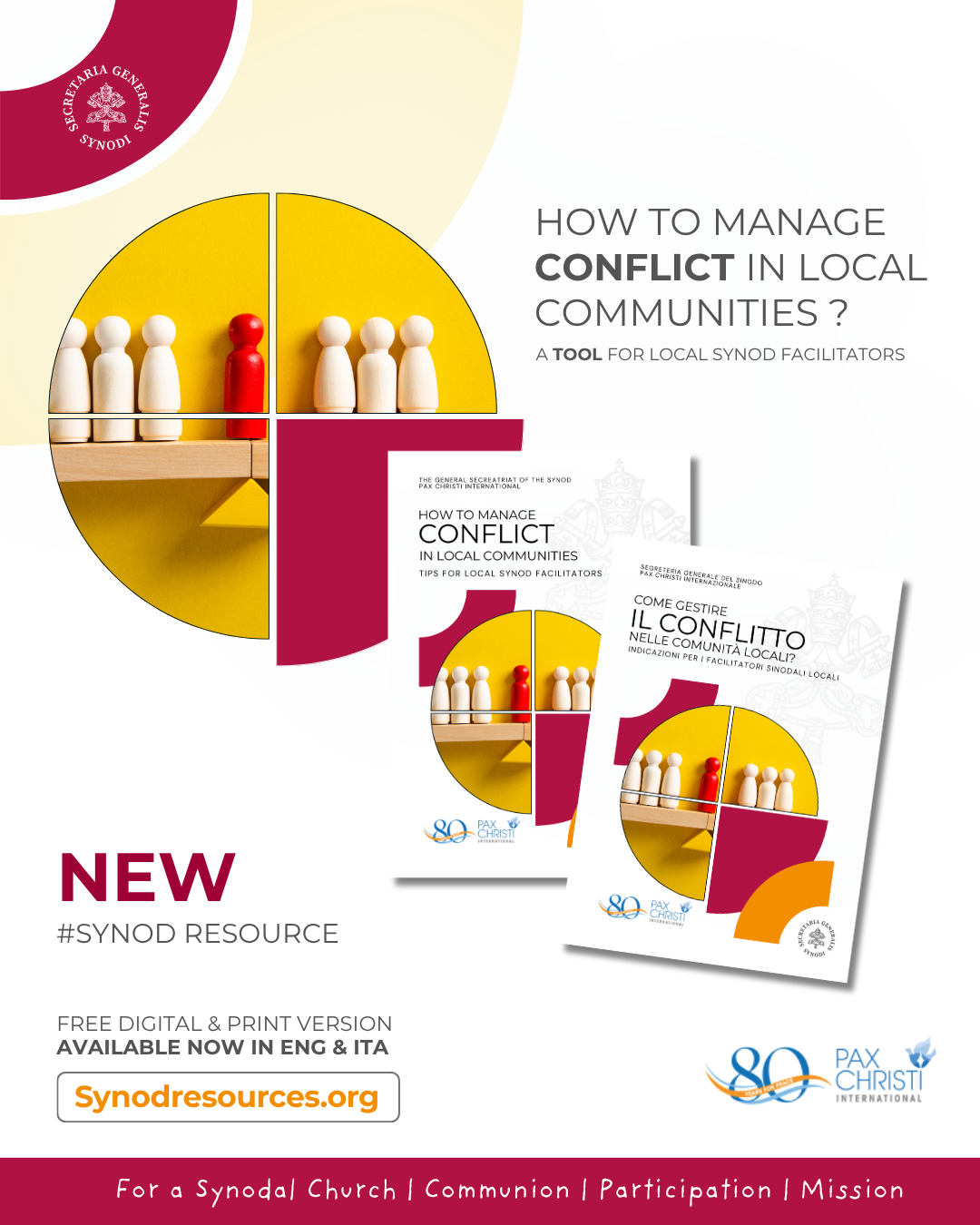
A new resource from the General Secretariat of the Synod, in collaboration with Pax Christi International’s Catholic Nonviolence Initiative, speaks directly to this experience.
How to manage conflict in local communities. Tips for Local Synod Facilitators is designed to support those who accompany communities in moments of dialogue, disagreement, and discernment, offering both practical tools and a deeply spiritual approach to conflict.
What makes this document especially valuable is that it does not treat conflict as something to avoid or “fix quickly,” but as a normal and even meaningful part of community life.
It gives facilitators a grounded way to respond when tensions arise—without panic, without polarization, and without losing sight of the dignity of each person involved. It helps transform difficult moments into opportunities for deeper listening, trust, and communion.
How does it help you?
It helps you prepare the right environment (space, time, and atmosphere) so conflict is less likely to escalate
-
- It teaches active listening and nonviolent communication that calm tension and build trust
- It offers clear step-by-step guidance for handling conflict when it appears in the moment
- It introduces the “conflict ladder” to help you recognize and de-escalate rising tensions early
- It provides the “conflict map” to understand what is really happening beneath positions and opinions
- It integrates prayer, silence, and simple rituals like the “Candle and the Cross” to ground conversations spiritually
- It shows how to close difficult meetings in a way that preserves peace and openness for the next encounter
The resource also emphasizes the importance of creating “houses of peace” — synodal communities rooted in Gospel nonviolence, where every person is welcomed with dignity and differences are approached with humility, patience, and hope. Rich with practical examples, reflections from Scripture, prayers, and rituals such as the “Candle and the Cross,” the document seeks to help communities walk together even amid disagreement.
This new publication is a valuable companion for parish groups, diocesan teams, synod facilitators, and all those committed to building a more listening, participatory, and peaceful Church. Everyone involved in synodal processes is warmly encouraged to download, read, and share this resource as a concrete contribution to fostering dialogue, healing, and unarmed and disarming peace in local communities.
Find the guide in Eng & Italian and soon also in French and Spanish.